Important Details
IJCRT - International Peer Reviewed, Open Access Journal, Multidisciplinary, Monthly, Nominal(Low) Fees for Professional Research Services International Journal of Creative Research Thoughts - IJCRT Peer Review Journal, Refereed Journal, Peer Reviewed Journal , Referred Journal and Indexed Journal, Open access, Online and Print Journal,international Journal Open Access, Accepted by Indian and foreign university ,IJCRT Followed Norms, guidelines, requirement, listing criteria and methodology of score/point also applied from: Scopus , Web of Science , UGC Approved , UGC CARE, UGC-CARE .
UGC Approved Journal No: 49023 (18)
UGC approval Link
https://ijcrt.org/ugc%20approval.jpg
All Policy and Approval
Please Like Our Facebook Page | CrossRef DOI and Hard copy of Certificate Provide if required. | www.IJCRT.org | editor@IJCRT.org | IJCRT WhatsApp +91 7990172303
Publication Details:
- Paper Submission : 30-Jun-2026. Call For Paper (Volume 14 | Issue 6 | Month- June 2026)
- Acceptance/Rejection Notification: Within 02-04 Days.
- Paper Publish: Within 02-04 Days after submitting all documents.
-
Submit Your Paper Any time There No deadline.
-
Publication fees : 1570 INR for Indian author & 59$ for foreign International author.
Please Like Our Facebook Page | CrossRef DOI and Hard copy of Certificate Provide if required.
Licence and Indexing
Indexing In Google Scholar, SSRN, ResearcherID-Publons, Semantic Scholar | AI-Powered Research Tool, Microsoft Academic, Academia.edu, arXiv.org, Research Gate, CiteSeerX, ResearcherID Thomson Reuters, Mendeley : reference manager, DocStoc, ISSUU, Scribd, and many more | High Impact Factor: 7.97 | Digital object identifier (DOI) and Hard Copy of certificate Provided.




























Licence
DOI
ISSN Approved impact factor: 7.97 
Creative Common 
Valid as per new UGC Gazette regulations 

INTERNATIONAL JOURNAL OF CREATIVE RESEARCH THOUGHTS - IJCRT (IJCRT.ORG)
International Peer Reviewed & Refereed Journals, Open Access Journal
IJCRT Peer-Reviewed (Refereed) Journal as Per New UGC Rules.
ISSN Approved Journal No: 2320-2882 | Impact factor: 7.97 | ESTD Year: 2013
Call For Paper - Volume 14 | Issue 6 | Month- June 2026
Scholarly open access journals, Peer-reviewed, and Refereed Journals, Impact factor 7.97 (Calculate by google scholar and Semantic Scholar | AI-Powered Research Tool) , Multidisciplinary, Monthly, Indexing in all major database & Metadata, Citation Generator, Digital Object Identifier(CrossRef DOI)
IJCRT WhatsApp Contact
IJCRT Search Xplore - Search all paper by Paper Name , Author Name, and Title
Volume 13 | Issue 8 |
Volume 13 | Issue 8 | Month
Downlaod After Publication 1) Table of content index in PDF
2) Table of content index in HTML 2)Table of content index in HTML
3) Front Page 3) Front Page
4) Back Page 4) Back Page
5) Editor Board Member 5)Editor Board Member
6) OLD Style Issue 6)OLD Style Issue
 |
 |
|---|---|
| IJCRT Journal front page | IJCRT Journal Back Page |
Paper Title: Impact Of Solar Flares On Earth Magnetosphere And AI Simulated Model For Prediction: A Space Weather Study
Author Name(s): Dr. Rohit Verma, Professor (Dr.) R.S. Chandok, Dr. LN Sahu, Dr. Poonam Singh
Published Paper ID: - IJCRT2508320
Register Paper ID - 292239
Publisher Journal Name: IJPUBLICATION, IJCRT
DOI Member ID: 10.6084/m9.doi.one.IJCRT2508320 and DOI :
Author Country : Indian Author, India, 482001 , JABALPUR, 482001 , | Research Area: Physics All Published Paper URL: http://ijcrt.org/viewfull.php?&p_id=IJCRT2508320 Published Paper PDF: download.php?file=IJCRT2508320 Published Paper PDF: http://www.ijcrt.org/papers/IJCRT2508320.pdf
Your Paper Publication Details:
Title: IMPACT OF SOLAR FLARES ON EARTH MAGNETOSPHERE AND AI SIMULATED MODEL FOR PREDICTION: A SPACE WEATHER STUDY
DOI (Digital Object Identifier) :
Pubished in Volume: 13 | Issue: 8 | Year: August 2025
Publisher Name : IJCRT | www.ijcrt.org | ISSN : 2320-2882
Subject Area: Physics All
Author type: Indian Author
Pubished in Volume: 13
Issue: 8
Pages: c770-c784
Year: August 2025
Downloads: 251
E-ISSN Number: 2320-2882
Abstract
The Solar flares are sudden powerful explode of energy from the Sun spread across the space that can seriously disturb Earth's magnetic shield, the magnetosphere. This unwanted energy can cause for real problems in our daily lives, such as interrupting satellite communications, GPS signals, and even causing power outages on the ground. This research our aim is to focuses on understanding and predicting how solar flares can Earth's magnetosphere by studying the powerful superstorm which happened in May 2024. The protective boundary of the magnetosphere was pushed unusually close to Earth, putting satellites and other systems at risk during this storm. We may be able to recreate how the magnetosphere responded during this event by using advanced computer models which simulate the movement of charged particles and magnetic fields. We also used machine learning tools to predict when solar storms would hit Earth and how strong they would be. The machine learning model may warn with impressive accuracy, giving us valuable time to protect our technology. This study shows that forecasting systems combined with detailed physical models can helps us better prepare for space weather events that could disrupt modern life. The storm raised in MAY 2024 had real impacts, including affecting airline routes, causing satellite glitches, and challenging power grid operators. As the Sun becomes more active in the coming years, therefore it is essential to keep improving our ability to predict and respond to these space weather events to protect both our technology and our daily activities.
Licence: creative commons attribution 4.0
License
Creative Commons Attribution 4.0 and The Open Definition

Keywords
Solar Flares, Magnetosphere, Space Weather, Geomagnetic Storms, MHD Modeling, AI Forecasting, CMEs, Ionosphere
License
Creative Commons Attribution 4.0 and The Open Definition
Paper Title: Enhancing Sports Event Management with PM²: Incorporating Risk and Sustainability Aspects
Author Name(s): Ayush Shende, Aditya Mulgaonkar, Gajendra Pandey, Sahil Mohammed, Niharika Jhunjhunwala
Published Paper ID: - IJCRT2508319
Register Paper ID - 292289
Publisher Journal Name: IJPUBLICATION, IJCRT
DOI Member ID: 10.6084/m9.doi.one.IJCRT2508319 and DOI :
Author Country : Indian Author, India, 410210 , Kharghar, 410210 , | Research Area: Management All Published Paper URL: http://ijcrt.org/viewfull.php?&p_id=IJCRT2508319 Published Paper PDF: download.php?file=IJCRT2508319 Published Paper PDF: http://www.ijcrt.org/papers/IJCRT2508319.pdf
Your Paper Publication Details:
Title: ENHANCING SPORTS EVENT MANAGEMENT WITH PM²: INCORPORATING RISK AND SUSTAINABILITY ASPECTS
DOI (Digital Object Identifier) :
Pubished in Volume: 13 | Issue: 8 | Year: August 2025
Publisher Name : IJCRT | www.ijcrt.org | ISSN : 2320-2882
Subject Area: Management All
Author type: Indian Author
Pubished in Volume: 13
Issue: 8
Pages: c750-c769
Year: August 2025
Downloads: 214
E-ISSN Number: 2320-2882
Abstract
Purpose: We recommend employing project management to manage sports events. To this purpose, we recommend an adaptation of the PM² project management methodology, which was developed inside the European Commission, to manage sports projects. Design/methodology/approach: We offer theoretical analyses arguing about what is a project in sport, the roles of event and sport management, and a theoretical adaptation of PM² methodology to sport management. While this study presents a tailored PM² approach designed for sports events, it also presents structured frameworks to incorporate two key dimensions (Risk Management and Sustainability Practices) to consider operational vulnerabilities and environmental accountabilities in sports events management. Results: We demonstrate that event management could be improved by PM² methodology with several adjustments. The primary adjustment involves splitting the original project execution phase into two distinct phases - the deployment phase and the project execution phase (stricto sensu). The first narrowly encompasses all the activities carried out in preparation for the sports competition, while the latter addresses the complexity of the precise dates of the competition in question, which includes simultaneous presence, mass participation of participants, and mass presence of spectators for this event. We also suggest changes to the original PM² governance model, to allow for a market orientation in order to maximize economic return of the event and why it includes the idea of the "extended customer," which includes the event owner, the participants and the spectators, as well as a risk management system across all phases of the PM² lifecycle framework and sustainability practice suggestions, in particular the minimization of waste and energy usage, and environmental impact assessments (ensuring events are not just well-managed, but resilient and environmentally friendly). Research limitations/implications: There needs to be more empirical research to examine how this adaptation of PM² gets implemented, especially the risk frameworks and sustainability impact indicators prescribed. Practical implications: We provide an adaptation of PM² methodology for the event managers enabling them to use project management standards in their respective events. Our adapted version reflects the marketing mix and market orientation, often referred to by event managers along with new tools and techniques to mitigate and manage risks and sustainable choices during the lifecycle of the project. Social implications: As an outcome, the rethinking of the role of sports events and managers to a project management perspective, will allow the use of cost-benefit analysis when developing a sport event which enables sports events to be not only successful but also profitable, sustainable or responsible and efficient. Moreover, the integration of sustainability principals and rigorous risk management, increases stakeholder trust in a future focused approach aligning with growing environmental and social governance (ESG) expectations globally. Originality/value: PM² is being applied for the first time to events, specifically sport events. The specific unique aspects of PM² make it useful in any sector, such as sport events where the manager may not have the project management standards and methodologies transferable experience. This extension proposal takes a progressive step in aligning project governance with newer imperatives of resilience to risk and sustainable development.
Licence: creative commons attribution 4.0
License
Creative Commons Attribution 4.0 and The Open Definition
Keywords
Sports Management, Sports, Event Management, Management
License
Creative Commons Attribution 4.0 and The Open Definition
Paper Title: Digital Yug Mein Baal Apradh Soochna Sanchar Prodhyogiki Aur Kishor Apradh Ka Samajshashtreeya Vishleshan
Author Name(s): Suresha Choubey
Published Paper ID: - IJCRT2508318
Register Paper ID - 291908
Publisher Journal Name: IJPUBLICATION, IJCRT
DOI Member ID: 10.6084/m9.doi.one.IJCRT2508318 and DOI :
Author Country : Indian Author, India, 495001 , Bilaspur, 495001 , | Research Area: Social Science All Published Paper URL: http://ijcrt.org/viewfull.php?&p_id=IJCRT2508318 Published Paper PDF: download.php?file=IJCRT2508318 Published Paper PDF: http://www.ijcrt.org/papers/IJCRT2508318.pdf
Your Paper Publication Details:
Title: DIGITAL YUG MEIN BAAL APRADH SOOCHNA SANCHAR PRODHYOGIKI AUR KISHOR APRADH KA SAMAJSHASHTREEYA VISHLESHAN
DOI (Digital Object Identifier) :
Pubished in Volume: 13 | Issue: 8 | Year: August 2025
Publisher Name : IJCRT | www.ijcrt.org | ISSN : 2320-2882
Subject Area: Social Science All
Author type: Indian Author
Pubished in Volume: 13
Issue: 8
Pages: c744-c749
Year: August 2025
Downloads: 184
E-ISSN Number: 2320-2882
Abstract
?? ??? ???? ????? ????? ???????????? (Information and Communication Technology - ICT) ?? ?????? ?? ??????? ?? ??? ??? ??????? ?? ?????? ?? ????????????? ???????? ???????? ???? ??, ??????? ???????? ?? ???????? ????? ?? ?????? ???? ????? ???????????? ?? ????? ?????? ?? ???? ?????? ?? ?????? ????? ?? ?????? ?? ???? ??, ???? ???? ?????????? ????? ?? ????? ?????, ?????? ?????? ?????, ???? ?????? ????????, ?????? ??????? ?? ????? ???? ????? ??????? ??????? ?? ???? ???? ??? ?? ?????? ?? ???????, ?????????, ?????? ?? ???????????? ?????? ?? ????? ???? ?? ?? ICT ?? ?????? ?? ?????? ?? ????? ?? ?? ?? ???? ???? ?????? ?? ??????? 20 ??? ????????? ?? ??? ????? ? ???????? ?? ?? ???????? ?????? ??? ?? ?? ???? ??? ICT ?? ?????? ?? ??????? ????, ???????? ?????? ??? ??????? ????? ?? ????? ???? ?? ?????? ???????? ???
Licence: creative commons attribution 4.0
License
Creative Commons Attribution 4.0 and The Open Definition
Keywords
????? ????? ???????????? (ICT), ??? ????? (Juvenile Delinquency), ????? ????? (Cyber Crime),???? ??????, ????? ????? (Juvenile Justice), ?????? ??????, ?????? ????? ,????? ??????? (Adolescent Behavior)
License
Creative Commons Attribution 4.0 and The Open Definition
Paper Title: Design and Implementation of ADPLL Using PYNQ Z2 FPGA
Author Name(s): Prajwal P, Dr. Jeeru Dinesh Reddy
Published Paper ID: - IJCRT2508317
Register Paper ID - 292392
Publisher Journal Name: IJPUBLICATION, IJCRT
DOI Member ID: 10.6084/m9.doi.one.IJCRT2508317 and DOI :
Author Country : Indian Author, India, 577501 , Chitradurga, 577501 , | Research Area: Science and Technology Published Paper URL: http://ijcrt.org/viewfull.php?&p_id=IJCRT2508317 Published Paper PDF: download.php?file=IJCRT2508317 Published Paper PDF: http://www.ijcrt.org/papers/IJCRT2508317.pdf
Your Paper Publication Details:
Title: DESIGN AND IMPLEMENTATION OF ADPLL USING PYNQ Z2 FPGA
DOI (Digital Object Identifier) :
Pubished in Volume: 13 | Issue: 8 | Year: August 2025
Publisher Name : IJCRT | www.ijcrt.org | ISSN : 2320-2882
Subject Area: Science and Technology
Author type: Indian Author
Pubished in Volume: 13
Issue: 8
Pages: c737-c743
Year: August 2025
Downloads: 214
E-ISSN Number: 2320-2882
Abstract
This work presents the design and implementation of an All-Digital Phase-Locked Loop (ADPLL) on the PYNQ-Z2 FPGA platform. The proposed system addresses limitations of traditional analog PLLs by utilizing fully digital components, enabling higher precision, scalability, and seamless integration with modern digital systems. The ADPLL architecture integrates a Time-to-Digital Converter (TDC), a Proportional-Integral Digital Loop Filter, a Digitally Controlled Oscillator (DCO), and a Frequency Divider. A normal filter is employed to improve noise immunity and enhance loop stability. The design is implemented in Verilog, synthesized, and deployed on the PYNQ-Z2 FPGA. Simulation and hardware tests validate the system's ability to achieve minimal jitter, zero steady-state phase error, and high synchronization accuracy, making it suitable for communication, signal processing, and clock synchronization applications.
Licence: creative commons attribution 4.0
License
Creative Commons Attribution 4.0 and The Open Definition
Keywords
All-Digital Phase-Locked Loop (ADPLL), PYNQ-Z2 FPGA, Time-to-Digital Converter (TDC), Digital Loop Filter, Digitally Controlled Oscillator (DCO), Frequency Divider, Phase Synchronization.
License
Creative Commons Attribution 4.0 and The Open Definition
Paper Title: Cognitive Demand in Mizoram Board's Class X Mathematics Algebra Unit: A Revised Bloom's Taxonomy Analysis
Author Name(s): Mr. Lalnunthara Khawlhring, Dr. Vanlaltanpuii, Mr. Zoramsanga
Published Paper ID: - IJCRT2508316
Register Paper ID - 292264
Publisher Journal Name: IJPUBLICATION, IJCRT
DOI Member ID: 10.6084/m9.doi.one.IJCRT2508316 and DOI : https://doi.org/10.56975/ijcrt.v13i8.292264
Author Country : Indian Author, India, 796001 , Aizawl, 796001 , | Research Area: Medical Science All Published Paper URL: http://ijcrt.org/viewfull.php?&p_id=IJCRT2508316 Published Paper PDF: download.php?file=IJCRT2508316 Published Paper PDF: http://www.ijcrt.org/papers/IJCRT2508316.pdf
Your Paper Publication Details:
Title: COGNITIVE DEMAND IN MIZORAM BOARD'S CLASS X MATHEMATICS ALGEBRA UNIT: A REVISED BLOOM'S TAXONOMY ANALYSIS
DOI (Digital Object Identifier) : https://doi.org/10.56975/ijcrt.v13i8.292264
Pubished in Volume: 13 | Issue: 8 | Year: August 2025
Publisher Name : IJCRT | www.ijcrt.org | ISSN : 2320-2882
Subject Area: Medical Science All
Author type: Indian Author
Pubished in Volume: 13
Issue: 8
Pages: c731-c736
Year: August 2025
Downloads: 303
E-ISSN Number: 2320-2882
Abstract
This study evaluates the cognitive level of textual questions in the Algebra unit of the Class X Mathematics textbook prescribed by the Mizoram Board of School Education, using Revised Bloom's Taxonomy (RBT). A content analysis of end-of-chapter questions across five chapters (Polynomials, Linear Equations in Two Variables, Quadratic Equations, Arithmetic Progression, and Sets) was conducted. Results indicate a predominant focus on lower-order thinking skills (LOTS), with 81.9% of questions categorized as "Applying" (C3), while higher-order thinking skills (HOTS) such as "Analyzing" (C4) and "Evaluating" (C5) constituted only 18.1%. Notably, "Creating" (C6) questions were absent. The findings highlight an imbalance in cognitive demand, underscoring the need for curriculum revisions to incorporate more HOTS-based questions to foster critical thinking and problem-solving abilities among students.
Licence: creative commons attribution 4.0
License
Creative Commons Attribution 4.0 and The Open Definition
Keywords
Algebra, Cognitive Level, Revised Bloom's Taxonomy, Mathematics Textbook, Mizoram Board.
License
Creative Commons Attribution 4.0 and The Open Definition
Paper Title: FEMINIST ECOPOLITICS AND RESISTANCE NARRATIVES IN N.K. JEMISIN'S THE BROKEN EARTH TRILOGY
Author Name(s): V ROJA, Dr. K. N. UMADEVI
Published Paper ID: - IJCRT2508315
Register Paper ID - 292313
Publisher Journal Name: IJPUBLICATION, IJCRT
DOI Member ID: 10.6084/m9.doi.one.IJCRT2508315 and DOI :
Author Country : Indian Author, India, 600056 , Chennai, 600056 , | Research Area: Languages Published Paper URL: http://ijcrt.org/viewfull.php?&p_id=IJCRT2508315 Published Paper PDF: download.php?file=IJCRT2508315 Published Paper PDF: http://www.ijcrt.org/papers/IJCRT2508315.pdf
Your Paper Publication Details:
Title: FEMINIST ECOPOLITICS AND RESISTANCE NARRATIVES IN N.K. JEMISIN'S THE BROKEN EARTH TRILOGY
DOI (Digital Object Identifier) :
Pubished in Volume: 13 | Issue: 8 | Year: August 2025
Publisher Name : IJCRT | www.ijcrt.org | ISSN : 2320-2882
Subject Area: Languages
Author type: Indian Author
Pubished in Volume: 13
Issue: 8
Pages: c728-c730
Year: August 2025
Downloads: 251
E-ISSN Number: 2320-2882
Abstract
This paper analyzes N.K. Jemisin's Broken Earth trilogy as a feminist ecopolitical allegory that links environmental injustice to systemic oppression. Drawing on ecofeminist theory, postcolonial critique, and narrative analysis, the study explores how Jemisin's depiction of the Anthropocene foregrounds the intertwined exploitation of the Earth and marginalized bodies, particularly women and orogenes. The Sanzed Empire's extractive systems mirror real-world structures of capitalism, colonialism, and racial hierarchy, while the trilogy's resistance movements center care, reciprocity, and community-based governance. Through narrative strategies such as second-person perspective and the reimagining of the Earth as an active political subject, Jemisin reframes liberation as ecological as well as social. The analysis argues that the trilogy's vision resonates with contemporary climate justice movements, calling for the dismantling of intersecting systems of domination and the cultivation of sustainable, reciprocal relationships with the planet.
Licence: creative commons attribution 4.0
License
Creative Commons Attribution 4.0 and The Open Definition
Keywords
Keywords: Feminist Ecopolitics, Environmental justice, Political allegory, Anthropocene, Ecofeminism, Climate justice, Postcolonial critique, Speculative fiction Resistance, Narrative perspective
License
Creative Commons Attribution 4.0 and The Open Definition
Paper Title: "Artificial Intelligence and Machine Learning in Precision Agriculture: Trends, Challenges, and Future Directions"
Author Name(s): Rajshree Soni, Prateek Bhanti, Vinod Maan
Published Paper ID: - IJCRT2508314
Register Paper ID - 292376
Publisher Journal Name: IJPUBLICATION, IJCRT
DOI Member ID: 10.6084/m9.doi.one.IJCRT2508314 and DOI : https://doi.org/10.56975/ijcrt.v13i8.292376
Author Country : Indian Author, India, 332001 , Sikar, 332001 , | Research Area: Science and Technology Published Paper URL: http://ijcrt.org/viewfull.php?&p_id=IJCRT2508314 Published Paper PDF: download.php?file=IJCRT2508314 Published Paper PDF: http://www.ijcrt.org/papers/IJCRT2508314.pdf
Your Paper Publication Details:
Title: "ARTIFICIAL INTELLIGENCE AND MACHINE LEARNING IN PRECISION AGRICULTURE: TRENDS, CHALLENGES, AND FUTURE DIRECTIONS"
DOI (Digital Object Identifier) : https://doi.org/10.56975/ijcrt.v13i8.292376
Pubished in Volume: 13 | Issue: 8 | Year: August 2025
Publisher Name : IJCRT | www.ijcrt.org | ISSN : 2320-2882
Subject Area: Science and Technology
Author type: Indian Author
Pubished in Volume: 13
Issue: 8
Pages: c713-c727
Year: August 2025
Downloads: 245
E-ISSN Number: 2320-2882
Abstract
The monetary growth of a country mainly depends upon the agricultural conditions of that country. Meeting the food needs of the current population is becoming more difficult due to population growth, climatic fluctuations, and resource inadequacy. Smart farming, additionally referred to as precision agriculture, and has appeared as an advanced technique to tackle modern difficulties in order to provide agricultural sustainability. Precision agriculture (PA) is a cutting-edge farming method for maximizing crop yield, minimizes waste, and enhances sustainability by utilizing technology. PA increases productivity and resource efficiency by endowing farmers to make knowledgeable decisions that are customized to individual areas within their fields through the use of data from soil sensors, satellite imagery, and drones. The shift is greatly aided by machine learning (ML), which analyzes and discerns patterns in enormous amounts of agricultural data to provide useful insights. An orderly analysis on the applications of machine learning has been presented by the author in this article. Various ML algorithms like deep learning, regressions analysis, CNN have been applied to monitor the crop health and its yield prediction. It also includes the crop disease prediction at earlier stage. In order to predict outcomes like when to plant, when to water, and whether to apply pesticides, these algorithms can process inputs from a variety of sources, including climatic data, soil composition, and real-time sensor data. They do this by learning from past trends. Farmers can apply site-specific management techniques with the integration of ML, optimizing crop yield while reducing environmental impact. This article examines the limitations and challenges encountered by precision agriculture regarding management of data, technology adoption, and cost-effectiveness.
Licence: creative commons attribution 4.0
License
Creative Commons Attribution 4.0 and The Open Definition
Keywords
Precision Agriculture, Machine Learning, Smart Farming, Artificial Intelligence
License
Creative Commons Attribution 4.0 and The Open Definition
Paper Title: Krishi Rakshaka – The AgriFusion
Author Name(s): Rachana V Murthy, Jahnavi C, Leena J, Varsha P
Published Paper ID: - IJCRT2508313
Register Paper ID - 292275
Publisher Journal Name: IJPUBLICATION, IJCRT
DOI Member ID: 10.6084/m9.doi.one.IJCRT2508313 and DOI :
Author Country : Indian Author, India, 560062 , Bangalore, 560062 , | Research Area: Science and Technology Published Paper URL: http://ijcrt.org/viewfull.php?&p_id=IJCRT2508313 Published Paper PDF: download.php?file=IJCRT2508313 Published Paper PDF: http://www.ijcrt.org/papers/IJCRT2508313.pdf
Your Paper Publication Details:
Title: KRISHI RAKSHAKA – THE AGRIFUSION
DOI (Digital Object Identifier) :
Pubished in Volume: 13 | Issue: 8 | Year: August 2025
Publisher Name : IJCRT | www.ijcrt.org | ISSN : 2320-2882
Subject Area: Science and Technology
Author type: Indian Author
Pubished in Volume: 13
Issue: 8
Pages: c706-c712
Year: August 2025
Downloads: 196
E-ISSN Number: 2320-2882
Abstract
This literature review examines the integration of artificial intelligence (AI), sensor networks, and IoT technologies in modern agriculture, with a focus on weed detection, animal intrusion prevention, irrigation automation, and soil health monitoring. It analyzes recent journal publications (2020-2025) that utilize deep learning models such as CNN and YOLOv5/YOLOv8 for real-time object detection, along with smart sensors for environmental data collection. Mobile applications and microcontrollers like Raspberry Pi and NodeMCU are also evaluated for automation and farmer interaction. The review highlights the limitations of existing systems--including poor cross-domain performance, reliance on internet connectivity, and lack of regional language support--and identifies the need for an integrated, edge-based, multi-functional solution like the Krishi ????? - The AgriFusion project. This study is intended to guide future work on accessible and sustainable smart farming platforms for smallholder farmers.
Licence: creative commons attribution 4.0
License
Creative Commons Attribution 4.0 and The Open Definition
Keywords
Weed Detection, IoT in Agriculture, Smart Irrigation, Animal Intrusion Detection, CNN
License
Creative Commons Attribution 4.0 and The Open Definition
Paper Title: Evaluation of Acute and subacute toxicity studies of Sphaeranthus Indicus Linn (Gorakh Mundi) in Swiss Albino mice
Author Name(s): T. Dinna Davis, Dr. Sunita Ogale, Mrs. Shikha Shukla
Published Paper ID: - IJCRT2508312
Register Paper ID - 292235
Publisher Journal Name: IJPUBLICATION, IJCRT
DOI Member ID: 10.6084/m9.doi.one.IJCRT2508312 and DOI : https://doi.org/10.56975/ijcrt.v13i8.292235
Author Country : Indian Author, India, 401 202 , Vasai(W), 401 202 , | Research Area: Science and Technology Published Paper URL: http://ijcrt.org/viewfull.php?&p_id=IJCRT2508312 Published Paper PDF: download.php?file=IJCRT2508312 Published Paper PDF: http://www.ijcrt.org/papers/IJCRT2508312.pdf
Your Paper Publication Details:
Title: EVALUATION OF ACUTE AND SUBACUTE TOXICITY STUDIES OF SPHAERANTHUS INDICUS LINN (GORAKH MUNDI) IN SWISS ALBINO MICE
DOI (Digital Object Identifier) : https://doi.org/10.56975/ijcrt.v13i8.292235
Pubished in Volume: 13 | Issue: 8 | Year: August 2025
Publisher Name : IJCRT | www.ijcrt.org | ISSN : 2320-2882
Subject Area: Science and Technology
Author type: Indian Author
Pubished in Volume: 13
Issue: 8
Pages: c689-c702
Year: August 2025
Downloads: 300
E-ISSN Number: 2320-2882
Abstract
Sphaeranthus Indicus Linn or East Indian Globe Thistle is a multi-branched aromatic herb consisting of various medicinal properties, and is used in the treatment of skin conditions, as an antimicrobial, immunomodulator, immunostimulant and in wound healing traditionally.[9] All the parts of the Sphaeranthus Indicus have been utilized for the treatment of various disease conditions out of which the marketed herbal formulations of Sphaeranthus Indicus were investigated for its toxicity profile which showed dose dependent toxicity. Toxicity profile of this marketed formulation was not investigated in previous studies Aim: - Explore the acute and subacute toxicity profile of the following two marketed herbal formulation of Sphaeranthus indicus linn for the safe use of traditional medicine and explore its potential for further effectiveness. Method: - In Acute toxicity study of both herbal formulations, Total no. of animals used were 24 male Swiss albino mice, weighing 25-30g, randomly assigned to experimental groups of 5mg/kg,50mg/kg, 300mg/kg and 1000mg/kg with 3 mice each and receiving single dose of the extract at 5mg/kg b.w,50mg/kg,300mg/kg and 1000mg/kg b.w respectively. Animals were monitored for 14 days for signs of toxicity, behavioral changes, mortality etc. In Sub-acute toxicity study, Total no of animals used were 70 Swiss albino mice weighing 25-30 g consisting of male and female Swiss albino mice randomly assigned to experimental groups of 50mg/kg, 1000mg/kg ,2000mg/kg with control group been given distilled water. The extract of herbal formulation of Sphaeranthus indicus was given at the doses of 50mg/kg,1000mg/kg,2000mg/kg per body weight of the mice for 28 consecutive days. The studies were conducted in compliance with OECD guidelines 423 and 407. Results: - Acute toxicity study showed no mortality up to the dose of 1000mg/kg, but mortality rates increase with higher doses. In subacute toxicity study, there was no mortality, up to the dose of 2000mg/kg with increase in deaths at higher doses. The hematological and biochemical analysis of the blood parameters don't show much significant differences. The histopathological analysis of liver shows marked lesions at higher doses. Conclusion: - It is concluded that the oral administration of doses of herbal formulation of Sphaeranthus indicus in acute study don't cause any mortality or other changes up to the level of 1000mg/kg. At higher doses there are possibilities of finding gross changes. In subacute study, no significant changes in the hematological, biochemical, and histopathological parameters were observed. There is mild grade of lesion with repeated and daily dosing of the drug at higher dose of 2000mg/kg indicating that at higher doses with repeated dosing there is mild level development of toxicity signs.
Licence: creative commons attribution 4.0
License
Creative Commons Attribution 4.0 and The Open Definition
Keywords
Sphaeranthus indicus Linn, Hematology, Biochemical, Histopathology, toxicity
License
Creative Commons Attribution 4.0 and The Open Definition
Paper Title: Secure Architecture for Data Ecosystems via IoT, Blockchain, and DNNs
Author Name(s): Tanmay Tripathy, Mr. Neeraj Srivastava
Published Paper ID: - IJCRT2508311
Register Paper ID - 292368
Publisher Journal Name: IJPUBLICATION, IJCRT
DOI Member ID: 10.6084/m9.doi.one.IJCRT2508311 and DOI :
Author Country : Indian Author, India, 110018 , New Delhi, 110018 , | Research Area: Science and Technology Published Paper URL: http://ijcrt.org/viewfull.php?&p_id=IJCRT2508311 Published Paper PDF: download.php?file=IJCRT2508311 Published Paper PDF: http://www.ijcrt.org/papers/IJCRT2508311.pdf
Your Paper Publication Details:
Title: SECURE ARCHITECTURE FOR DATA ECOSYSTEMS VIA IOT, BLOCKCHAIN, AND DNNS
DOI (Digital Object Identifier) :
Pubished in Volume: 13 | Issue: 8 | Year: August 2025
Publisher Name : IJCRT | www.ijcrt.org | ISSN : 2320-2882
Subject Area: Science and Technology
Author type: Indian Author
Pubished in Volume: 13
Issue: 8
Pages: c684-c688
Year: August 2025
Downloads: 207
E-ISSN Number: 2320-2882
Abstract
Integrating IoT, Blockchain, and Deep Neural Networks (DNNs) creates a secure, intelligent, and decentralized data ecosystem. IoT devices collect real-time data, while blockchain ensures tamper-proof, transparent, and trusted data exchange. DNNs analyze this data to extract insights and enable predictive decision-making. Blockchain smart contracts automate secure communication and access control, while federated learning allows DNNs to train without exposing raw data. This synergy enhances scalability, privacy, and resilience, making it ideal for applications like smart cities, healthcare, and industrial automation. The model overcomes traditional ML limitations by distributing intelligence and trust across the network.
Licence: creative commons attribution 4.0
License
Creative Commons Attribution 4.0 and The Open Definition
Keywords
IoT, Blockchain, Deep learning, Deep Neural Network, ML, Edge Computing, Federated Learning
License
Creative Commons Attribution 4.0 and The Open Definition
Call For Paper June 2026
Call For Papers
June 2026
Volume 14 | Issue 6
Last Date :
30-Jun-2026
Submit Manuscript Online Impact Factor: 7.97 Review Results : Within 02-03 Days Paper Publication : Within 02-03 Days
June 2026
Volume 14 | Issue 6
Last Date :
30-Jun-2026
Submit Manuscript Online Impact Factor: 7.97 Review Results : Within 02-03 Days Paper Publication : Within 02-03 Days
Published Issue Details
For Authors
Forms / Downloads
Other IMP Links
Indexing Partner
Research Area
LICENSE





ISSN and 7.97 Impact Factor Details

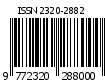
ISSN: 2320-2882 Impact Factor: 7.97 and ISSN APPROVED Journal Starting Year (ESTD) : 2013


ISSN and 7.97 Impact Factor Details
ISSN: 2320-2882 Impact Factor: 7.97 and ISSN APPROVED Journal Starting Year (ESTD) : 2013
DOI Details
CONFERENCE
CONFERENCE MANAGMENT & PUBLICATION CONFERENCE PROPOSAL
RECENT CONFERENCE

CONFERENCE PROPOSAL CONFERENCE PROCEEDINGS
CONFERENCE PROPOSAL CONFERENCE PROCEEDINGS
For Reviewer /Referral (RMS) Earn 500 per paper
Important Links
NEWS & Conference
Digital Library
IJCRT RMS | Earn 500 Per Paper.

Open Access


LICENSE
Indexing Partner
Scholarly open access journals, Peer-reviewed, and Refereed Journals, Impact factor 7.97 (Calculate by google scholar and Semantic Scholar | AI-Powered Research Tool) , Multidisciplinary, Monthly, Indexing in all major database & Metadata, Citation Generator, Digital Object Identifier(DOI)