Important Details
IJCRT - International Peer Reviewed, Open Access Journal, Multidisciplinary, Monthly, Nominal(Low) Fees for Professional Research Services International Journal of Creative Research Thoughts - IJCRT Peer Review Journal, Refereed Journal, Peer Reviewed Journal , Referred Journal and Indexed Journal, Open access, Online and Print Journal,international Journal Open Access, Accepted by Indian and foreign university ,IJCRT Followed Norms, guidelines, requirement, listing criteria and methodology of score/point also applied from: Scopus , Web of Science , UGC Approved , UGC CARE, UGC-CARE .
UGC Approved Journal No: 49023 (18)
UGC approval Link
https://ijcrt.org/ugc%20approval.jpg
All Policy and Approval
Please Like Our Facebook Page | CrossRef DOI and Hard copy of Certificate Provide if required. | www.IJCRT.org | editor@IJCRT.org | IJCRT WhatsApp +91 7990172303
Publication Details:
- Paper Submission : 30-Jun-2026. Call For Paper (Volume 14 | Issue 6 | Month- June 2026)
- Acceptance/Rejection Notification: Within 02-04 Days.
- Paper Publish: Within 02-04 Days after submitting all documents.
-
Submit Your Paper Any time There No deadline.
-
Publication fees : 1570 INR for Indian author & 59$ for foreign International author.
Please Like Our Facebook Page | CrossRef DOI and Hard copy of Certificate Provide if required.
Licence and Indexing
Indexing In Google Scholar, SSRN, ResearcherID-Publons, Semantic Scholar | AI-Powered Research Tool, Microsoft Academic, Academia.edu, arXiv.org, Research Gate, CiteSeerX, ResearcherID Thomson Reuters, Mendeley : reference manager, DocStoc, ISSUU, Scribd, and many more | High Impact Factor: 7.97 | Digital object identifier (DOI) and Hard Copy of certificate Provided.




























Licence
DOI
ISSN Approved impact factor: 7.97 
Creative Common 
Valid as per new UGC Gazette regulations 

INTERNATIONAL JOURNAL OF CREATIVE RESEARCH THOUGHTS - IJCRT (IJCRT.ORG)
International Peer Reviewed & Refereed Journals, Open Access Journal
IJCRT Peer-Reviewed (Refereed) Journal as Per New UGC Rules.
ISSN Approved Journal No: 2320-2882 | Impact factor: 7.97 | ESTD Year: 2013
Call For Paper - Volume 14 | Issue 6 | Month- June 2026
Scholarly open access journals, Peer-reviewed, and Refereed Journals, Impact factor 7.97 (Calculate by google scholar and Semantic Scholar | AI-Powered Research Tool) , Multidisciplinary, Monthly, Indexing in all major database & Metadata, Citation Generator, Digital Object Identifier(CrossRef DOI)
IJCRT WhatsApp Contact
IJCRT Search Xplore - Search all paper by Paper Name , Author Name, and Title
Volume 13 | Issue 8 |
Volume 13 | Issue 8 | Month
Downlaod After Publication 1) Table of content index in PDF
2) Table of content index in HTML 2)Table of content index in HTML
3) Front Page 3) Front Page
4) Back Page 4) Back Page
5) Editor Board Member 5)Editor Board Member
6) OLD Style Issue 6)OLD Style Issue
 |
 |
|---|---|
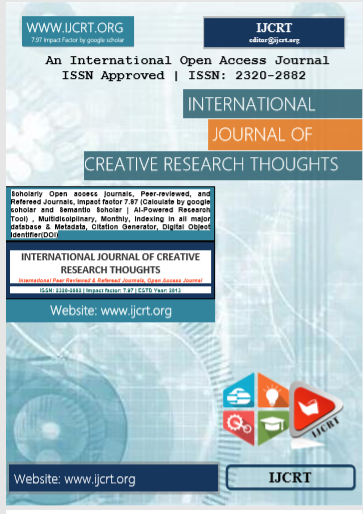
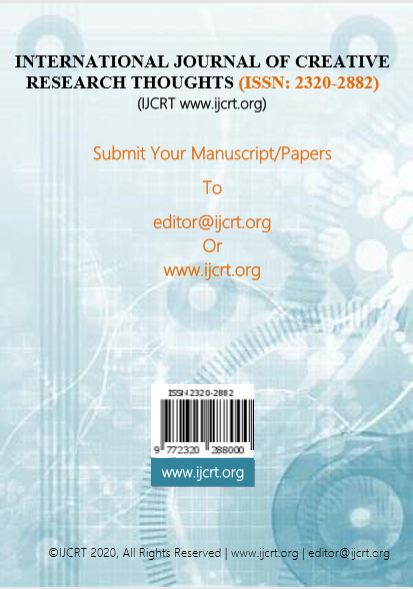
| IJCRT Journal front page | IJCRT Journal Back Page |
Paper Title: A Study on Nike's Influencer Playbook: An authenticity and ROI in the Creator Economy
Author Name(s): Dr Shaheeda Banu.S, Ramya Janardhan
Published Paper ID: - IJCRT2508714
Register Paper ID - 292075
Publisher Journal Name: IJPUBLICATION, IJCRT
DOI Member ID: 10.6084/m9.doi.one.IJCRT2508714 and DOI : https://doi.org/10.56975/ijcrt.v13i8.292075
Author Country : Indian Author, India, - , -, - , | Research Area: Science and Technology Published Paper URL: http://ijcrt.org/viewfull.php?&p_id=IJCRT2508714 Published Paper PDF: download.php?file=IJCRT2508714 Published Paper PDF: http://www.ijcrt.org/papers/IJCRT2508714.pdf
Your Paper Publication Details:
Title: A STUDY ON NIKE'S INFLUENCER PLAYBOOK: AN AUTHENTICITY AND ROI IN THE CREATOR ECONOMY
DOI (Digital Object Identifier) : https://doi.org/10.56975/ijcrt.v13i8.292075
Pubished in Volume: 13 | Issue: 8 | Year: August 2025
Publisher Name : IJCRT | www.ijcrt.org | ISSN : 2320-2882
Subject Area: Science and Technology
Author type: Indian Author
Pubished in Volume: 13
Issue: 8
Pages: g190-g196
Year: August 2025
Downloads: 253
E-ISSN Number: 2320-2882
Abstract
This case study delves into Nike's strategic evolution in response to the rise of the creator economy and the shifting dynamics of consumer behaviour in the digital age. As traditional advertising models began to lose their influence--particularly among Gen Z and Millennial consumers--Nike recognized the need to pivot its branding strategy. Historically reliant on high-profile athlete endorsements, the brand began transitioning toward a more decentralized, authentic, and community-focused model of marketing built around influencers and content creators. By collaborating with a wide spectrum of influencers--including Nano-, micro-, macro-, and celebrity-level figures--Nike built a multi-platform presence across TikTok, Instagram, YouTube, and emerging social ecosystems. These influencers were not just brand promoters but co-creators, helping Nike communicate its values of innovation, inclusivity, empowerment, and sustainability in a relatable and culturally relevant manner. The case explores the core components of Nike's influencer marketing strategies. The study provides a comparative analysis of traditional vs. influencer marketing ROI, evaluating Nike's success in terms of engagement rates, content lifespan, brand favourability, and conversion metrics. Special attention is given to campaigns like "You Can't Stop Us" and "Move with Nike", which exemplify the brand's ability to blend storytelling with platform-native engagement. The study investigates the challenges of influencer marketing, such as maintaining brand consistency across diverse voices, avoiding influencer fatigue, and safeguarding against reputational risks. It also discusses Nike's use of AI and analytics platforms (like Creator IQ and Upfluence) to optimize campaign performance and mitigate these risks. Ultimately, this case positions Nike as a pioneering legacy brand in the influencer marketing space--balancing scalability with personalization, and tradition with innovation. The findings not only highlight Nike's success but also provide a framework for other global brands seeking to thrive in the evolving landscape of social media-driven, creator-led brand engagement.
Licence: creative commons attribution 4.0
License
Creative Commons Attribution 4.0 and The Open Definition

Keywords
A Study on Nike's Influencer Playbook: An authenticity and ROI in the Creator Economy
License
Creative Commons Attribution 4.0 and The Open Definition
Paper Title: पंडित दीनदयाल उपाध्याय का सामाजिक- आर्थिक दृष्टिकोण: भारतीय संदर्भ में विश्लेषण
Author Name(s): Dr. Sunil Kumar Pandit
Published Paper ID: - IJCRT2508713
Register Paper ID - 293017
Publisher Journal Name: IJPUBLICATION, IJCRT
DOI Member ID: 10.6084/m9.doi.one.IJCRT2508713 and DOI :
Author Country : Indian Author, India, 812001 , BHAGALPUR , 812001 , | Research Area: Social Science All Published Paper URL: http://ijcrt.org/viewfull.php?&p_id=IJCRT2508713 Published Paper PDF: download.php?file=IJCRT2508713 Published Paper PDF: http://www.ijcrt.org/papers/IJCRT2508713.pdf
Your Paper Publication Details:
Title: पंडित दीनदयाल उपाध्याय का सामाजिक- आर्थिक दृष्टिकोण: भारतीय संदर्भ में विश्लेषण
DOI (Digital Object Identifier) :
Pubished in Volume: 13 | Issue: 8 | Year: August 2025
Publisher Name : IJCRT | www.ijcrt.org | ISSN : 2320-2882
Subject Area: Social Science All
Author type: Indian Author
Pubished in Volume: 13
Issue: 8
Pages: g180-g189
Year: August 2025
Downloads: 113
E-ISSN Number: 2320-2882
Abstract
पंडित दीनदयाल उपाध्याय न केवल एक राजनेता थे, बल्कि भारतीय चिंतन परंपरा के एक ऐसे मौलिक विचारक थे जिन्होंने पश्चिमी राजनीतिक और आर्थिक सिद्धांतों के बीच एक भारतीय विकल्प प्रस्तुत किया। उनका ‘एकात्म मानववाद’ एक ऐसी समन्वित दृष्टि है, जिसमें मनुष्य को केवल आर्थिक उत्पादक या उपभोक्ता नहीं, बल्कि एक चैतन्य, नैतिक और आध्यात्मिक सत्ता के रूप में देखा गया है। उन्होंने यह स्पष्ट किया कि भारतीय समाज की रचना, उसकी आवश्यकताएँ और उसकी चेतना पश्चिमी समाजों से भिन्न है, अतः इसके समाधान भी भारतीय संस्कृति की अंतःप्रेरणा से ही निकल सकते हैं। उनकी विचारधारा यह मानती है कि समाज, व्यक्ति और राष्ट्र अलग-अलग नहीं, बल्कि एक अविभाज्य इकाई के रूप में जुड़े हुए हैं। जिस प्रकार शरीर के विभिन्न अंग मिलकर शरीर की क्रियाशीलता और स्वास्थ्य को बनाए रखते हैं, उसी प्रकार व्यक्ति, परिवार, समाज और राष्ट्र एक जीवंत इकाई के रूप में कार्य करते हैं। एकात्म मानववाद में इस जीवन-दृष्टि को केंद्रीय स्थान प्राप्त है। इसके अनुसार, समाज की प्रगति तभी संभव है जब व्यक्ति का सर्वांगीण विकास हो और वह विकास केवल आर्थिक नहीं, बल्कि शारीरिक, मानसिक, बौद्धिक और आत्मिक चारों स्तरों पर हो। उपाध्याय जी का मानना था कि केवल योजनाओं और आंकड़ों के सहारे समाज का विकास नहीं किया जा सकता, जब तक उस समाज की आत्मा को न समझा जाए। वे इस बात पर बल देते थे कि भारत का विकास स्वदेशी सिद्धांतों और भारतीय संस्कृति की आत्मा के अनुरूप ही संभव है। उनके अनुसार, पूंजीवाद जहां व्यक्ति को अत्यधिक स्वार्थी और भोगवादी बनाता है, वहीं साम्यवाद व्यक्ति को राज्य का दास बना देता है और उसकी स्वतंत्रता तथा सृजनशीलता का ह्रास करता है। इन दोनों का विरोध करते हुए उन्होंने एक ऐसा मार्ग सुझाया जो व्यक्ति की गरिमा, समाज की एकता, और राष्ट्र की सांस्कृतिक पहचान को एकसूत्र में बांधता है। एकात्म मानववाद एक तरह से भारतीय समाज के पुनर्गठन की रूपरेखा है, जो आर्थिक योजनाओं, सामाजिक संरचना और राजनीतिक दिशा को एक साझा सांस्कृतिक दृष्टि में समाहित करता है। इस विचार में ग्राम स्वराज, विकेन्द्रीकरण, स्थानीय संसाधनों पर आधारित आत्मनिर्भरता और नैतिक मूल्यों पर आधारित नेतृत्व के दर्शन मिलते हैं। उन्होंने यह संदेश दिया कि तकनीक और विज्ञान का उपयोग अवश्य किया जाए, परंतु वह भारतीय मूल्यों और जीवनशैली के अनुरूप हो। आज जबकि भारत तीव्र आर्थिक विकास, शहरीकरण और वैश्वीकरण के दौर से गुजर रहा है, एकात्म मानववाद की यह चेतना अत्यंत प्रासंगिक हो गई है। यह केवल एक राजनीतिक वैकल्पिक विचारधारा नहीं, बल्कि राष्ट्र की सांस्कृतिक और आध्यात्मिक पुनर्रचना का मार्गदर्शन करती है। यह दृष्टि हमें यह समझने में मदद करती है कि भारत का पुनर्निर्माण केवल भौतिक संसाधनों से नहीं, बल्कि आत्मा से जुड़ी विचारधाराओं से होगा — जहां व्यक्ति के भीतर दायित्वबोध, समाज के प्रति संवेदना और राष्ट्र के लिए समर्पण की भावना हो। इस प्रकार, पंडित दीनदयाल उपाध्याय का एकात्म मानववाद आज के समय में एक वैचारिक पथप्रदर्शक के रूप में खड़ा है, जो भारतीय चिंतन की मौलिकता, उसकी व्यापकता और समग्रता का प्रतीक बन चुका है। उनके विचार आज भी हमें यह स्मरण कराते हैं कि भारत का भविष्य तभी उज्जवल होगा जब उसकी आत्मा, संस्कृति और मूल्य उसके विकास के केंद्र में होंगे।
Licence: creative commons attribution 4.0
License
Creative Commons Attribution 4.0 and The Open Definition
Keywords
दीनदयाल उपाध्याय एकात्म मानववाद, भारतीय सामाजिक संरचना, ग्राम स्वराज, विकास और संस्कृति, मानव विकास
License
Creative Commons Attribution 4.0 and The Open Definition
Paper Title: Sense of Self & Related Behaviour - A Behavioral Psychology Perspective in Purananooru
Author Name(s): T K Ramesh, Dr. (Mrs.) P Thamilarasi
Published Paper ID: - IJCRT2508712
Register Paper ID - 292933
Publisher Journal Name: IJPUBLICATION, IJCRT
DOI Member ID: 10.6084/m9.doi.one.IJCRT2508712 and DOI : https://doi.org/10.56975/ijcrt.v13i8.292933
Author Country : Indian Author, India, 560032 , Bangalore Urban, 560032 , | Research Area: Medical Science All Published Paper URL: http://ijcrt.org/viewfull.php?&p_id=IJCRT2508712 Published Paper PDF: download.php?file=IJCRT2508712 Published Paper PDF: http://www.ijcrt.org/papers/IJCRT2508712.pdf
Your Paper Publication Details:
Title: SENSE OF SELF & RELATED BEHAVIOUR - A BEHAVIORAL PSYCHOLOGY PERSPECTIVE IN PURANANOORU
DOI (Digital Object Identifier) : https://doi.org/10.56975/ijcrt.v13i8.292933
Pubished in Volume: 13 | Issue: 8 | Year: August 2025
Publisher Name : IJCRT | www.ijcrt.org | ISSN : 2320-2882
Subject Area: Medical Science All
Author type: Indian Author
Pubished in Volume: 13
Issue: 8
Pages: g173-g179
Year: August 2025
Downloads: 230
E-ISSN Number: 2320-2882
Abstract
In our ancient Tamil Kingdoms described by the Sangam Age, in a war, the power king "Annihilates" his enemies, their kingdom and generally do not stop the war and its destruction, in spite of the sufferings to the people, natural resources and properties of the enemy kingdom. A king of any kingdom is also so compassionate towards his people and all living things! This character is expressed in the literary works describing the 7 great benefactors who were Pari, Valvil Ori, Nedumudi Kari, Began, Aai Andiran, Nalli and Adhiyaman. If kings, upholding such values and virtues of benefaction, also engage in complete annihilation of their enemies, then what can be the internal prompt or force for the king's behaviour? What can be the possible psychological underpinnings of such act? This article attempts to explore the same and present the same..
Licence: creative commons attribution 4.0
License
Creative Commons Attribution 4.0 and The Open Definition
Keywords
Fear, Anxiety, Annihilation, Flight or Fight Syndrome, Responding, Reacting
License
Creative Commons Attribution 4.0 and The Open Definition
Paper Title: Assessment and evaluation of long - term vegetation change using normalized difference vegetation index (NDVI): a three decade case study in Rampurhat I CD block of Birbhum district, West Bengal, India
Author Name(s): Susmita Roy
Published Paper ID: - IJCRT2508711
Register Paper ID - 292975
Publisher Journal Name: IJPUBLICATION, IJCRT
DOI Member ID: 10.6084/m9.doi.one.IJCRT2508711 and DOI :
Author Country : Indian Author, India, 731224 , Rampurhat, 731224 , | Research Area: Science All Published Paper URL: http://ijcrt.org/viewfull.php?&p_id=IJCRT2508711 Published Paper PDF: download.php?file=IJCRT2508711 Published Paper PDF: http://www.ijcrt.org/papers/IJCRT2508711.pdf
Your Paper Publication Details:
Title: ASSESSMENT AND EVALUATION OF LONG - TERM VEGETATION CHANGE USING NORMALIZED DIFFERENCE VEGETATION INDEX (NDVI): A THREE DECADE CASE STUDY IN RAMPURHAT I CD BLOCK OF BIRBHUM DISTRICT, WEST BENGAL, INDIA
DOI (Digital Object Identifier) :
Pubished in Volume: 13 | Issue: 8 | Year: August 2025
Publisher Name : IJCRT | www.ijcrt.org | ISSN : 2320-2882
Subject Area: Science All
Author type: Indian Author
Pubished in Volume: 13
Issue: 8
Pages: g164-g172
Year: August 2025
Downloads: 151
E-ISSN Number: 2320-2882
Abstract
Licence: creative commons attribution 4.0
License
Creative Commons Attribution 4.0 and The Open Definition
Keywords
Vegetation Change, NDVI, Remote sensing, Change detection, Change detection
License
Creative Commons Attribution 4.0 and The Open Definition
Paper Title: SUSTAINING THE WEAVE: TRANSFORMING WASTE INTO SUSTAINABLE LUXURY
Author Name(s): Dr. Simerjeet Kaur, Miss. Priya Yadav, Miss Priya
Published Paper ID: - IJCRT2508710
Register Paper ID - 292923
Publisher Journal Name: IJPUBLICATION, IJCRT
DOI Member ID: 10.6084/m9.doi.one.IJCRT2508710 and DOI :
Author Country : Indian Author, India, 144008 , Jalandhar, 144008 , | Research Area: Arts All Published Paper URL: http://ijcrt.org/viewfull.php?&p_id=IJCRT2508710 Published Paper PDF: download.php?file=IJCRT2508710 Published Paper PDF: http://www.ijcrt.org/papers/IJCRT2508710.pdf
Your Paper Publication Details:
Title: SUSTAINING THE WEAVE: TRANSFORMING WASTE INTO SUSTAINABLE LUXURY
DOI (Digital Object Identifier) :
Pubished in Volume: 13 | Issue: 8 | Year: August 2025
Publisher Name : IJCRT | www.ijcrt.org | ISSN : 2320-2882
Subject Area: Arts All
Author type: Indian Author
Pubished in Volume: 13
Issue: 8
Pages: g153-g163
Year: August 2025
Downloads: 165
E-ISSN Number: 2320-2882
Abstract
In India, Weaving is one of the oldest crafts in human history. Weaving is a timeless skill that has been performed for ages globally. It consists of intertwining threads or yarns to produce a fabric. In India, various types of beds have existed for thousands of years. It is unknown when sheeting was first used to keep the sleeper comfortable but it is likely that the first true bed sheets were linen. This study is to collect boutique waste and using them into making of bedsheets. This research has demonstrated, recycling of boutique waste fabrics on bedsheets with weaving that have passed down from one generation to another. On such weaving art that have stood even thousands of years. Innovation was taken by recycling boutique waste fabrics on bedsheets with weaving for college going girls and for that weaving designs were selected to be made on glace cotton Fabric. Firstly, weaving designs were randomly selected for the bedsheets. Secondly, 10 weaving designs designed on Adobe Illustrator and then each design survey was conducted and interviewed with college going girls( Graduated and Post Graduated Students) with age limit 18-25 years and then a survey is conducted for the most preferred designs. After selection of designs placements of bedsheets were done and then again a survey is conducted for the most preferred weaving designs on bedsheets. Then we got the Final 3 articles of recycling boutique waste fabrics on bedsheets with weaving, which got more acceptability rather than other.
Licence: creative commons attribution 4.0
License
Creative Commons Attribution 4.0 and The Open Definition
Keywords
Recycling Boutique Waste, Sustainable, Weaving, Bedsheet, Recycling, Textile waste
License
Creative Commons Attribution 4.0 and The Open Definition
Paper Title: Sociology Of Deviant Behaviour: Attitude, Behaviour And Conditions
Author Name(s): K.S. Joseph
Published Paper ID: - IJCRT2508709
Register Paper ID - 277330
Publisher Journal Name: IJPUBLICATION, IJCRT
DOI Member ID: 10.6084/m9.doi.one.IJCRT2508709 and DOI :
Author Country : Indian Author, India, - , -, - , | Research Area: Science and Technology Published Paper URL: http://ijcrt.org/viewfull.php?&p_id=IJCRT2508709 Published Paper PDF: download.php?file=IJCRT2508709 Published Paper PDF: http://www.ijcrt.org/papers/IJCRT2508709.pdf
Your Paper Publication Details:
Title: SOCIOLOGY OF DEVIANT BEHAVIOUR: ATTITUDE, BEHAVIOUR AND CONDITIONS
DOI (Digital Object Identifier) :
Pubished in Volume: 13 | Issue: 8 | Year: August 2025
Publisher Name : IJCRT | www.ijcrt.org | ISSN : 2320-2882
Subject Area: Science and Technology
Author type: Indian Author
Pubished in Volume: 13
Issue: 8
Pages: g143-g152
Year: August 2025
Downloads: 247
E-ISSN Number: 2320-2882
Abstract
Sociologically, a deviant is one to whom that label has successfully been applied while a deviant behaviour is one that people so label. Deviance lies in the eyes of the beholder. There is nothing inherently deviant in any particular attitude, act, or condition, until some section or groups define them as deviant. Deviance only exists when it is created by society. Hence, the ethos of the society of the time is kernal in labelling acts and persons. As deviancy can be in attitude, behaviour and conditions, so too, theories of deviancy are of psychological, biological and sociological. Psychological theories address attitudinal deviancy, while biological theories respond to behaviour deviancy and sociological theories answers to sociological deviancy. Thus 'ABC' of deviancy is explained by the 'PBS' theories of deviancy. Social determinism approach stresses that though human beings are endowed with free will, it gets neutralised in the social situations and, finally, the individual gives in to the ways of society. Social Disorganisation theory suggests that disorganized societies tend to have more deviants; and Anomie theory holds that it is normlessness that leads individuals to deviancy while social control theory reasons that most people would avoid deviant behaviour if they have a strong bond with social conventions (norms) and institutions like family, religion and state. Social learning theory asserts that every new member in the society learns socially acceptable as well as unacceptable (deviant) behaviour from his/her surroundings and the preceding generation(s). Differential association and learning theory further consolidates that it is not just anyone but rather, it is from the most significant persons, friends and neighbours that most behaviour are learned. Social milieu and neighbourhood, therefore, are of crucial importance in developing deviants. Theory of Triadic Influence (TTI) ultimately comprehends these different components and streams them in a triadic order of personal, social and environment factors. All the three exert sway at three levels- Ultimate/underlying causes, Distal or predisposing influences and Proximal or immediate predictors- which lead to an individual's choice of decisions, experiment and, finally behaviour. This paper is a theoretical discourse that concludes the view that deviancy and deviant behaviour are subject to society and the historical time, not permanent or absolute.
Licence: creative commons attribution 4.0
License
Creative Commons Attribution 4.0 and The Open Definition
Keywords
Deviancy; Attitude, Behaviour and Conditions (ABC); Psychological, Biological and Sociological (PBS); Theory of Triadic Influence (TTI); Alcohol, Tobacco and Other Drugs (ATOD); Experimental Tobacco Use (ETU); Experimental Alcohol Use (EAU); Social Referents.
License
Creative Commons Attribution 4.0 and The Open Definition
Paper Title: Enhancing Intrusion Detection Systems with Graph-Based Anomaly Detection Algorithms
Author Name(s): ANANTHANATH G.V.S, N. VISWANADHA REDDY
Published Paper ID: - IJCRT2508708
Register Paper ID - 293023
Publisher Journal Name: IJPUBLICATION, IJCRT
DOI Member ID: 10.6084/m9.doi.one.IJCRT2508708 and DOI :
Author Country : Indian Author, India, 517501 , Tirupati, 517501 , | Research Area: Science and Technology Published Paper URL: http://ijcrt.org/viewfull.php?&p_id=IJCRT2508708 Published Paper PDF: download.php?file=IJCRT2508708 Published Paper PDF: http://www.ijcrt.org/papers/IJCRT2508708.pdf
Your Paper Publication Details:
Title: ENHANCING INTRUSION DETECTION SYSTEMS WITH GRAPH-BASED ANOMALY DETECTION ALGORITHMS
DOI (Digital Object Identifier) :
Pubished in Volume: 13 | Issue: 8 | Year: August 2025
Publisher Name : IJCRT | www.ijcrt.org | ISSN : 2320-2882
Subject Area: Science and Technology
Author type: Indian Author
Pubished in Volume: 13
Issue: 8
Pages: g136-g142
Year: August 2025
Downloads: 151
E-ISSN Number: 2320-2882
Abstract
Intrusion Detection Systems (IDS) are crucial for identifying malicious activities and security breaches in computer networks. Traditional IDS techniques, such as signature-based detection, are limited in their ability to detect new or sophisticated attacks. This paper presents an enhancement of IDS by incorporating graph theory to model network behavior and detects anomalies that may indicate potential intrusions. By representing network traffic and interactions as graphs, where nodes correspond to entities like users, devices, and servers, and edges represent interactions, IDS can detect subtle deviations from normal behavior patterns. We propose a graph-based anomaly detection algorithm that leverages graph traversal techniques and centrality metrics for identifying anomalies. Additionally, we explore scalability challenges and the integration of machine learning to further enhance the detection accuracy of the IDS. The paper provides a comprehensive analysis of graph theory's role in modern IDS and proposes solutions to improve real-time detection in large-scale networks.
Licence: creative commons attribution 4.0
License
Creative Commons Attribution 4.0 and The Open Definition
Keywords
Keywords-- IDS, DDoS, Graph-Based Anomaly Detection Algorithm (GBADA)
License
Creative Commons Attribution 4.0 and The Open Definition
Paper Title: Women Empowerment and Humanitarian Valuesin Sudha Murty's Children Literature
Author Name(s): Aarushi Walgaonkar
Published Paper ID: - IJCRT2508707
Register Paper ID - 292936
Publisher Journal Name: IJPUBLICATION, IJCRT
DOI Member ID: 10.6084/m9.doi.one.IJCRT2508707 and DOI :
Author Country : Indian Author, India, 440023 , Nagpur, 440023 , | Research Area: Medical Science All Published Paper URL: http://ijcrt.org/viewfull.php?&p_id=IJCRT2508707 Published Paper PDF: download.php?file=IJCRT2508707 Published Paper PDF: http://www.ijcrt.org/papers/IJCRT2508707.pdf
Your Paper Publication Details:
Title: WOMEN EMPOWERMENT AND HUMANITARIAN VALUESIN SUDHA MURTY'S CHILDREN LITERATURE
DOI (Digital Object Identifier) :
Pubished in Volume: 13 | Issue: 8 | Year: August 2025
Publisher Name : IJCRT | www.ijcrt.org | ISSN : 2320-2882
Subject Area: Medical Science All
Author type: Indian Author
Pubished in Volume: 13
Issue: 8
Pages: g131-g135
Year: August 2025
Downloads: 179
E-ISSN Number: 2320-2882
Abstract
Prominent Indian novelist and philanthropist Sudha Murty has made important contributions to children's literature by incorporating moral, ethical, and humanitarian principles into straightforward yet meaningful tales. Her books for young readers are effective moral education resources that foster compassion, generosity, empathy, and a profound regard for human dignity. The dual themes of women's empowerment and humanitarian principles as they are represented in Sudha Murty's children's books are examined in this research paper. Murty teaches kids the concept of treating people with love, respect, and compassion via captivating stories. These qualities are fundamental to the study of ethics and axiology. She also gently but successfully emphasizes the potential, strength, and resiliency of women and girls, sowing the seeds of gender equality and empowerment in the minds of young people. Tales include How I Teach My Grandmother to Read and Write, Grandma's Bag of Stories, and The Magic of Lost Temple. Include moral quandaries, strong female characters, and commonplace situations that mirror current events. By presenting women as intelligent, clever, and kind individuals, Murty questions gender norms and inspires kids to see women as equal members of society. This essay examines a few of Murty's children's novels to show how she instils a profound ethical knowledge in young readers through realistic narratives and straightforward language. Her tales serve as social reflectors, inspiring kids to acknowledge and embrace women's rights and potential in addition to modeling humanitarian ideals in their own conduct. Through her writing, Sudha Murty becomes a role model for raising future citizens who are gender aware and socially conscious.
Licence: creative commons attribution 4.0
License
Creative Commons Attribution 4.0 and The Open Definition
Keywords
Ethics, humanitarian perspective, humanism, human propensity, philanthropy.
License
Creative Commons Attribution 4.0 and The Open Definition
Paper Title: EFFECTIVE PEDAGOGICAL STRATEGIES FOR FOUNDATIONAL LITERACY AND NUMERACY IN EARLY CHILDHOOD CARE AND EDUCATION WITH REFERENCE TO NEP-2020
Author Name(s): LIPUN SAHOO, KABERI KUMARI PADHI
Published Paper ID: - IJCRT2508706
Register Paper ID - 293016
Publisher Journal Name: IJPUBLICATION, IJCRT
DOI Member ID: 10.6084/m9.doi.one.IJCRT2508706 and DOI :
Author Country : Indian Author, India, 752035 , BANPUR, 752035 , | Research Area: Arts1 All Published Paper URL: http://ijcrt.org/viewfull.php?&p_id=IJCRT2508706 Published Paper PDF: download.php?file=IJCRT2508706 Published Paper PDF: http://www.ijcrt.org/papers/IJCRT2508706.pdf
Your Paper Publication Details:
Title: EFFECTIVE PEDAGOGICAL STRATEGIES FOR FOUNDATIONAL LITERACY AND NUMERACY IN EARLY CHILDHOOD CARE AND EDUCATION WITH REFERENCE TO NEP-2020
DOI (Digital Object Identifier) :
Pubished in Volume: 13 | Issue: 8 | Year: August 2025
Publisher Name : IJCRT | www.ijcrt.org | ISSN : 2320-2882
Subject Area: Arts1 All
Author type: Indian Author
Pubished in Volume: 13
Issue: 8
Pages: g123-g130
Year: August 2025
Downloads: 200
E-ISSN Number: 2320-2882
Abstract
Foundational Literacy and Numeracy (FLN) constitute the most essential skills that enable children to read with understanding and perform basic mathematical operations. Early Childhood Care and Education (ECCE) is recognized as the critical stage for developing these abilities, as the first eight years of life lay the groundwork for lifelong learning. The National Education Policy (NEP) 2020 has identified the attainment of FLN by all children by the end of Grade 3 as an urgent national mission, emphasizing play-based, activity-oriented, and developmentally appropriate pedagogical practices. This paper discusses effective pedagogical strategies for promoting FLN in ECCE in the light of NEP 2020. It highlights approaches such as Activity-Based and Play-Oriented Learning, Multisensory and Experiential Approach, Mother-Tongue/ Home Languages- Based Learning, Integrating Literacy and Numeracy in daily life, Developmentally Appropriate Practices, Technology- Enabled Learning, Continuous Assessment for Learning, Inclusive and Equitable Practices, Teacher Capacity Building, Parental and Community Engagement. These strategies ensure joyful, inclusive, and contextually relevant learning for children, particularly those from tribal and marginalized communities. The study underscores that achieving universal FLN requires not only innovative pedagogy but also teacher capacity building, parental engagement, and systemic support through initiatives like NIPUN Bharat Mission. Strengthening FLN in ECCE is, therefore, not merely an academic requirement but a social responsibility to ensure equity, quality, and holistic development for all children in India.
Licence: creative commons attribution 4.0
License
Creative Commons Attribution 4.0 and The Open Definition
Keywords
PEDAGOGICAL, FOUNDATIONAL LITERACY AND NUMERACY, EARLY CHILDHOOD CARE AND EDUCATION, NEP-2020
License
Creative Commons Attribution 4.0 and The Open Definition
Paper Title: Advances in Sugarcane Genotype Development: A Decadal Review (2013-2023)
Author Name(s): Mujahid S. Khwaja
Published Paper ID: - IJCRT2508705
Register Paper ID - 293009
Publisher Journal Name: IJPUBLICATION, IJCRT
DOI Member ID: 10.6084/m9.doi.one.IJCRT2508705 and DOI : https://doi.org/10.56975/ijcrt.v13i8.293009
Author Country : Indian Author, India, 444101 , AKOT, 444101 , | Research Area: Life Sciences All Published Paper URL: http://ijcrt.org/viewfull.php?&p_id=IJCRT2508705 Published Paper PDF: download.php?file=IJCRT2508705 Published Paper PDF: http://www.ijcrt.org/papers/IJCRT2508705.pdf
Your Paper Publication Details:
Title: ADVANCES IN SUGARCANE GENOTYPE DEVELOPMENT: A DECADAL REVIEW (2013-2023)
DOI (Digital Object Identifier) : https://doi.org/10.56975/ijcrt.v13i8.293009
Pubished in Volume: 13 | Issue: 8 | Year: August 2025
Publisher Name : IJCRT | www.ijcrt.org | ISSN : 2320-2882
Subject Area: Life Sciences All
Author type: Indian Author
Pubished in Volume: 13
Issue: 8
Pages: g120-g122
Year: August 2025
Downloads: 181
E-ISSN Number: 2320-2882
Abstract
Sugarcane (Saccharum officinarum L.) is the most important sugar crop worldwide and a key bioenergy resource. Over the last decade (2013-2023), significant progress has been made in the development and adoption of improved sugarcane genotypes. These advances include enhanced yield potential, improved sucrose recovery, tolerance to abiotic stresses such as drought and salinity, and resistance against major diseases like red rot and smut. In parallel, molecular breeding, marker-assisted selection (MAS), and transgenic approaches have been applied in sugarcane improvement programs, though adoption remains uneven across countries. This review synthesizes data from FAO, ICAR, and published studies to highlight global and regional progress in sugarcane genotype improvement.
Licence: creative commons attribution 4.0
License
Creative Commons Attribution 4.0 and The Open Definition
Keywords
Sugarcane, Genotypes, Stress tolerance, Molecular breeding, Varietal development, FAO
License
Creative Commons Attribution 4.0 and The Open Definition
Call For Paper June 2026
Call For Papers
June 2026
Volume 14 | Issue 6
Last Date :
30-Jun-2026
Submit Manuscript Online Impact Factor: 7.97 Review Results : Within 02-03 Days Paper Publication : Within 02-03 Days
June 2026
Volume 14 | Issue 6
Last Date :
30-Jun-2026
Submit Manuscript Online Impact Factor: 7.97 Review Results : Within 02-03 Days Paper Publication : Within 02-03 Days
Published Issue Details
For Authors
Forms / Downloads
Other IMP Links
Indexing Partner
Research Area
LICENSE





ISSN and 7.97 Impact Factor Details

ISSN: 2320-2882 Impact Factor: 7.97 and ISSN APPROVED Journal Starting Year (ESTD) : 2013


ISSN and 7.97 Impact Factor Details
ISSN: 2320-2882 Impact Factor: 7.97 and ISSN APPROVED Journal Starting Year (ESTD) : 2013
DOI Details
CONFERENCE
CONFERENCE MANAGMENT & PUBLICATION CONFERENCE PROPOSAL
RECENT CONFERENCE

CONFERENCE PROPOSAL CONFERENCE PROCEEDINGS
CONFERENCE PROPOSAL CONFERENCE PROCEEDINGS
For Reviewer /Referral (RMS) Earn 500 per paper
Important Links
NEWS & Conference
Digital Library
IJCRT RMS | Earn 500 Per Paper.

Open Access


LICENSE
Indexing Partner
Scholarly open access journals, Peer-reviewed, and Refereed Journals, Impact factor 7.97 (Calculate by google scholar and Semantic Scholar | AI-Powered Research Tool) , Multidisciplinary, Monthly, Indexing in all major database & Metadata, Citation Generator, Digital Object Identifier(DOI)