Important Details
IJCRT - International Peer Reviewed, Open Access Journal, Multidisciplinary, Monthly, Nominal(Low) Fees for Professional Research Services International Journal of Creative Research Thoughts - IJCRT Peer Review Journal, Refereed Journal, Peer Reviewed Journal , Referred Journal and Indexed Journal, Open access, Online and Print Journal,international Journal Open Access, Accepted by Indian and foreign university ,IJCRT Followed Norms, guidelines, requirement, listing criteria and methodology of score/point also applied from: Scopus , Web of Science , UGC Approved , UGC CARE, UGC-CARE .
UGC Approved Journal No: 49023 (18)
UGC approval Link
https://ijcrt.org/ugc%20approval.jpg
All Policy and Approval
Please Like Our Facebook Page | CrossRef DOI and Hard copy of Certificate Provide if required. | www.IJCRT.org | editor@IJCRT.org | IJCRT WhatsApp +91 7990172303
Publication Details:
- Paper Submission : 30-Jun-2026. Call For Paper (Volume 14 | Issue 6 | Month- June 2026)
- Acceptance/Rejection Notification: Within 02-04 Days.
- Paper Publish: Within 02-04 Days after submitting all documents.
-
Submit Your Paper Any time There No deadline.
-
Publication fees : 1570 INR for Indian author & 59$ for foreign International author.
Please Like Our Facebook Page | CrossRef DOI and Hard copy of Certificate Provide if required.
Licence and Indexing
Indexing In Google Scholar, SSRN, ResearcherID-Publons, Semantic Scholar | AI-Powered Research Tool, Microsoft Academic, Academia.edu, arXiv.org, Research Gate, CiteSeerX, ResearcherID Thomson Reuters, Mendeley : reference manager, DocStoc, ISSUU, Scribd, and many more | High Impact Factor: 7.97 | Digital object identifier (DOI) and Hard Copy of certificate Provided.




























Licence
DOI
ISSN Approved impact factor: 7.97 
Creative Common 
Valid as per new UGC Gazette regulations 

INTERNATIONAL JOURNAL OF CREATIVE RESEARCH THOUGHTS - IJCRT (IJCRT.ORG)
International Peer Reviewed & Refereed Journals, Open Access Journal
IJCRT Peer-Reviewed (Refereed) Journal as Per New UGC Rules.
ISSN Approved Journal No: 2320-2882 | Impact factor: 7.97 | ESTD Year: 2013
Call For Paper - Volume 14 | Issue 6 | Month- June 2026
Scholarly open access journals, Peer-reviewed, and Refereed Journals, Impact factor 7.97 (Calculate by google scholar and Semantic Scholar | AI-Powered Research Tool) , Multidisciplinary, Monthly, Indexing in all major database & Metadata, Citation Generator, Digital Object Identifier(CrossRef DOI)
IJCRT WhatsApp Contact
IJCRT Search Xplore - Search all paper by Paper Name , Author Name, and Title
Volume 13 | Issue 8 |
Volume 13 | Issue 8 | Month
Downlaod After Publication 1) Table of content index in PDF
2) Table of content index in HTML 2)Table of content index in HTML
3) Front Page 3) Front Page
4) Back Page 4) Back Page
5) Editor Board Member 5)Editor Board Member
6) OLD Style Issue 6)OLD Style Issue
 |
 |
|---|---|
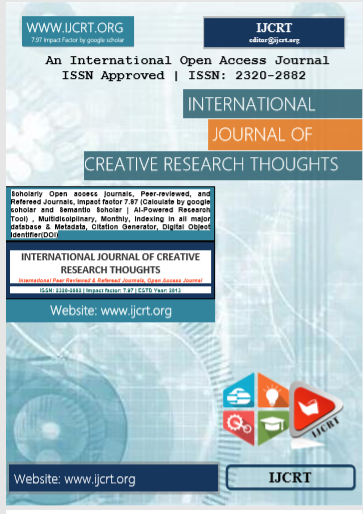
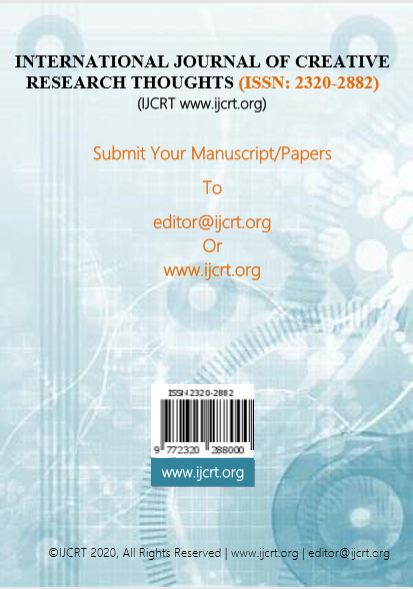
| IJCRT Journal front page | IJCRT Journal Back Page |
Paper Title: Investigating Heavy Metal Stress On Microbial Populations: Adaptations And Growth Responses
Author Name(s): Pendyala Sai Srinidhi, Ashrith Kumar A, Ann Irene D
Published Paper ID: - IJCRT2508795
Register Paper ID - 293115
Publisher Journal Name: IJPUBLICATION, IJCRT
DOI Member ID: 10.6084/m9.doi.one.IJCRT2508795 and DOI :
Author Country : Indian Author, India, 560049 , Benguluru, 560049 , | Research Area: Life Sciences All Published Paper URL: http://ijcrt.org/viewfull.php?&p_id=IJCRT2508795 Published Paper PDF: download.php?file=IJCRT2508795 Published Paper PDF: http://www.ijcrt.org/papers/IJCRT2508795.pdf
Your Paper Publication Details:
Title: INVESTIGATING HEAVY METAL STRESS ON MICROBIAL POPULATIONS: ADAPTATIONS AND GROWTH RESPONSES
DOI (Digital Object Identifier) :
Pubished in Volume: 13 | Issue: 8 | Year: August 2025
Publisher Name : IJCRT | www.ijcrt.org | ISSN : 2320-2882
Subject Area: Life Sciences All
Author type: Indian Author
Pubished in Volume: 13
Issue: 8
Pages: g874-g883
Year: August 2025
Downloads: 143
E-ISSN Number: 2320-2882
Abstract
Heavy metal contamination in soil ecosystems poses a significant environmental and microbiological concern due to the persistent and toxic nature of metals such as Zinc and Cadmium. This study evaluated the microbial response to heavy metal-induced stress by isolating soil bacteria from industrially impacted areas in Bangalore, India. Using standard microbiological techniques, the isolates were cultured on various media and were exposed to various concentrations of Zn and Cd to evaluate their tolerance profiles. Disc diffusion assays were performed to determine zones of inhibition, revealing concentration-dependent sensitivity. Zinc showed moderate antimicrobial effects, with partial bacterial growth observed at lower concentrations, while cadmium exhibited strong toxicity and completely inhibited microbial growth in most cases. Subculturing in broth media further confirmed these observations, with visible growth in Zinc-supplemented Nutrient Broth but complete inhibition in Luria Broth, potentially due to me
Licence: creative commons attribution 4.0
License
Creative Commons Attribution 4.0 and The Open Definition

Keywords
Heavy metal stress; Cadmium; Zinc; Disc diffusion assay; Bioremediation potential
License
Creative Commons Attribution 4.0 and The Open Definition
Paper Title: Modern Day Challenges Of College Students: Relationship Between Motivation To Use Social Media For Body Comparison And Dimensions Of Body Self-image
Author Name(s): DR. KAVITA KUMAR, SANYA AGARWAL
Published Paper ID: - IJCRT2508794
Register Paper ID - 292962
Publisher Journal Name: IJPUBLICATION, IJCRT
DOI Member ID: 10.6084/m9.doi.one.IJCRT2508794 and DOI : https://doi.org/10.56975/ijcrt.v13i8.292962
Author Country : Indian Author, India, 282005 , Agra, 282005 , | Research Area: Arts1 All Published Paper URL: http://ijcrt.org/viewfull.php?&p_id=IJCRT2508794 Published Paper PDF: download.php?file=IJCRT2508794 Published Paper PDF: http://www.ijcrt.org/papers/IJCRT2508794.pdf
Your Paper Publication Details:
Title: MODERN DAY CHALLENGES OF COLLEGE STUDENTS: RELATIONSHIP BETWEEN MOTIVATION TO USE SOCIAL MEDIA FOR BODY COMPARISON AND DIMENSIONS OF BODY SELF-IMAGE
DOI (Digital Object Identifier) : https://doi.org/10.56975/ijcrt.v13i8.292962
Pubished in Volume: 13 | Issue: 8 | Year: August 2025
Publisher Name : IJCRT | www.ijcrt.org | ISSN : 2320-2882
Subject Area: Arts1 All
Author type: Indian Author
Pubished in Volume: 13
Issue: 8
Pages: g868-g873
Year: August 2025
Downloads: 183
E-ISSN Number: 2320-2882
Abstract
Body self-image refers to how one perceives their own bodies on the basis of different aspects like fitness, fatness, overall appearance, and some other aspects. The motivation to compare one's body through social media describes a person's inclination to evaluate their own physical appearance in relation to others they see online. The present study was done on 200 college students to study the relationship between social media use with the motivation of body comparison and dimensions of body self-image. The tools used were motivation to use social media for body comparison and subscales of body self-image questionnaire-short form (BSIQ-SF). Correlation design was used and the results showed a significant negative relationship between motivation to use social media for body comparison and investment in ideals (r = -0.145*), other correlations with BSIQ-SF subscales were not significant. Regarding BSIQ-SF subscale interrelations, positive significant correlations emerged between investment in ideals and health fitness influence (r = 0.179*), social dependence (r = 0.267***), and attention to grooming (r = 0.377***). Negative significant correlations were found between overall appearance evaluation and other variables like fatness evaluation (r = -0.516***) and negative affect (r = -0.496***). The study is significant because it provides the basis for developing psychological interventions, educational policies, empirical evidence that would help in the reformation of societal standards of beauty and perception of a 'perfect body', by forming an essential reference for further studies in this field of research.
Licence: creative commons attribution 4.0
License
Creative Commons Attribution 4.0 and The Open Definition
Keywords
College Students, Motivation to Use Social Media for Body Comparison, Dimensions of Body Self-image, Social Media
License
Creative Commons Attribution 4.0 and The Open Definition
Paper Title: Violence and Memory in Manto's Selected Stories: Thanda Gosht and Khol Do
Author Name(s): Shivani Kirad
Published Paper ID: - IJCRT2508793
Register Paper ID - 293164
Publisher Journal Name: IJPUBLICATION, IJCRT
DOI Member ID: 10.6084/m9.doi.one.IJCRT2508793 and DOI :
Author Country : Indian Author, India, 301001 , Alwar, 301001 , | Research Area: Arts All Published Paper URL: http://ijcrt.org/viewfull.php?&p_id=IJCRT2508793 Published Paper PDF: download.php?file=IJCRT2508793 Published Paper PDF: http://www.ijcrt.org/papers/IJCRT2508793.pdf
Your Paper Publication Details:
Title: VIOLENCE AND MEMORY IN MANTO'S SELECTED STORIES: THANDA GOSHT AND KHOL DO
DOI (Digital Object Identifier) :
Pubished in Volume: 13 | Issue: 8 | Year: August 2025
Publisher Name : IJCRT | www.ijcrt.org | ISSN : 2320-2882
Subject Area: Arts All
Author type: Indian Author
Pubished in Volume: 13
Issue: 8
Pages: g865-g867
Year: August 2025
Downloads: 132
E-ISSN Number: 2320-2882
Abstract
Abstract- The relationship between violence and memory in Saadat Hasan Manto's Partition tales Thanda Gosht and Khol Do is examined in this essay. Both tales illustrate how the pain of Partition persists as an embodied memory and psychological scar long after the violence has ended. Ishwar Singh's discovery of the murdered girl and his subsequent impotence in Thanda Gosht reveal how cruelty leaves a lasting memory that undermines connection and identity. In contrast, Sakina's dehumanized state, where her robotic answer to the command "open it," attests to the erasure of agency under the weight of repeated assaults, is how Khol Do foregrounds the collective pain of displacement and sexual abuse. Together, these stories illustrate Manto's unflinching portrayal of Partition as not merely a historical rupture but a continuing site of memory, where survivors and victims' alike embody the afterlife of violence. Drawing on trauma theory, particularly Cathy Caruth's notion of trauma as a belated and intrusive experience, this paper argues that Manto situates Partition within a framework of unending remembrance, making visible the inescapable entanglement of violence, memory, and identity.
Licence: creative commons attribution 4.0
License
Creative Commons Attribution 4.0 and The Open Definition
Keywords
Violence, trauma, memory, partition, Manto and Caruth
License
Creative Commons Attribution 4.0 and The Open Definition
Paper Title: ASSESS THE QUALITY OF LIFE AND DISABILITY OF PATIENTS HAVING SOMATOFORM DISORDER
Author Name(s): Mr. Mayanglambam Sankerdev Singh, Dr. Payal Sharma
Published Paper ID: - IJCRT2508792
Register Paper ID - 292648
Publisher Journal Name: IJPUBLICATION, IJCRT
DOI Member ID: 10.6084/m9.doi.one.IJCRT2508792 and DOI :
Author Country : Indian Author, India, 452016 , Indore, 452016 , | Research Area: Humanities All Published Paper URL: http://ijcrt.org/viewfull.php?&p_id=IJCRT2508792 Published Paper PDF: download.php?file=IJCRT2508792 Published Paper PDF: http://www.ijcrt.org/papers/IJCRT2508792.pdf
Your Paper Publication Details:
Title: ASSESS THE QUALITY OF LIFE AND DISABILITY OF PATIENTS HAVING SOMATOFORM DISORDER
DOI (Digital Object Identifier) :
Pubished in Volume: 13 | Issue: 8 | Year: August 2025
Publisher Name : IJCRT | www.ijcrt.org | ISSN : 2320-2882
Subject Area: Humanities All
Author type: Indian Author
Pubished in Volume: 13
Issue: 8
Pages: g858-g864
Year: August 2025
Downloads: 123
E-ISSN Number: 2320-2882
Abstract
Background: Somatoform disorder is characterized by physical symptoms without adequate medical explanation, significantly impacting patients' quality of life and contributing to disability. Despite its clinical relevance, limited research has focused on the Indian population, particularly in Madhya Pradesh. Objectives: To assess the quality of life and disability among patients diagnosed with somatoform disorder and to examine their association with selected sociodemographic variables. Methods: A descriptive cross-sectional study was conducted among 120 patients attending psychiatry outpatient departments in selected hospitals of Indore, Madhya Pradesh. Standardized tools including the WHOQOL-BREF scale and WHO Disability Assessment Schedule (WHODAS 2.0) were administered. Data were analyzed using descriptive statistics (mean, SD, percentage) and inferential statistics (chi-square test, ANOVA, Pearson correlation). Results: The majority of participants (58%) were females, and the most affected age group was 25-44 years (62%). The mean quality of life score was 47.6 (SD = 8.9), indicating poor quality of life across physical and psychological domains. Disability scores revealed moderate to severe impairment in work and social functioning, with a mean WHODAS score of 39.4 (SD = 11.2). Gender, educational status, and duration of illness were significantly associated with both quality of life and disability (p < 0.05). A negative correlation (r = -0.62) was found between quality of life and disability scores, suggesting that higher disability was associated with poorer quality of life. Conclusion: Patients with somatoform disorder experience substantial impairment in daily functioning and reduced quality of life. Early detection, psychoeducation, and integration of psychosocial interventions are essential for improving outcomes.
Licence: creative commons attribution 4.0
License
Creative Commons Attribution 4.0 and The Open Definition
Keywords
Keywords: Somatoform disorder, quality of life, disability, psychosocial variables, Indore
License
Creative Commons Attribution 4.0 and The Open Definition
Paper Title: A study of effectiveness of 'Cross Over Learning' Method for Science subject at primary level students
Author Name(s): Dr. Manisha Vinay Indani, Ms. Priyanka Pawar
Published Paper ID: - IJCRT2508791
Register Paper ID - 291881
Publisher Journal Name: IJPUBLICATION, IJCRT
DOI Member ID: 10.6084/m9.doi.one.IJCRT2508791 and DOI :
Author Country : Indian Author, India, 425001 , Jalgaon, 425001 , | Research Area: Medical Science All Published Paper URL: http://ijcrt.org/viewfull.php?&p_id=IJCRT2508791 Published Paper PDF: download.php?file=IJCRT2508791 Published Paper PDF: http://www.ijcrt.org/papers/IJCRT2508791.pdf
Your Paper Publication Details:
Title: A STUDY OF EFFECTIVENESS OF 'CROSS OVER LEARNING' METHOD FOR SCIENCE SUBJECT AT PRIMARY LEVEL STUDENTS
DOI (Digital Object Identifier) :
Pubished in Volume: 13 | Issue: 8 | Year: August 2025
Publisher Name : IJCRT | www.ijcrt.org | ISSN : 2320-2882
Subject Area: Medical Science All
Author type: Indian Author
Pubished in Volume: 13
Issue: 8
Pages: g851-g857
Year: August 2025
Downloads: 129
E-ISSN Number: 2320-2882
Abstract
Abstract : This research study is based on innovative teaching method for Science subject. The primary students afraid about the science subject. Most of the students and their parents use to send their children to the coaching classes from the primary stage. It creates burden on the students. Science is the subject that can be apply in the day today life also. Teacher should develop the scientific attitude of the students. From the primary classes if proper teaching method is adopted then it will make sound base for the future. Therefore an attempt has been made to taught the science subject by using Cross Over Learning Method. In cross over learning method formal way of teaching and informal way of teaching is adopted. The main objective was to select the lesson for science subject and develop the material for Cross over Learning Method and to study its effectiveness in terms of achievement of the students in science subject. For this research study two schools were randomly selected. Two classes of six slandered were selected. Total 100 students were selected by using simple random method. Both the classes randomly assigned in Control group and Experimental group. Experimental method was used to study the effectiveness of the Cross Over Learning Method. Pre teat and post test control group design was used to control the extraneous variables. The treatment was given for 30 days. It was found that Cross Over Learning makes the students active learners. They become happy while learning the Science subject. The Cross Over Learning Method was more effective then traditional method of teaching Science subject,
Licence: creative commons attribution 4.0
License
Creative Commons Attribution 4.0 and The Open Definition
Keywords
Cross over Learning, Science teaching , Innovative Teaching Learning
License
Creative Commons Attribution 4.0 and The Open Definition
Paper Title: INVESTIGATING HEAVY METAL-INDUCED STRESS ON MICROBIAL POPULATIONS AND THEIR RESPONSE TO ADAPTIONS AND GROWTH
Author Name(s): Shambhavi C B, Ashrith Kumar A, Ann Irene. D
Published Paper ID: - IJCRT2508790
Register Paper ID - 293107
Publisher Journal Name: IJPUBLICATION, IJCRT
DOI Member ID: 10.6084/m9.doi.one.IJCRT2508790 and DOI :
Author Country : Indian Author, India, 560049 , Bengaluru, 560049 , | Research Area: Life Sciences All Published Paper URL: http://ijcrt.org/viewfull.php?&p_id=IJCRT2508790 Published Paper PDF: download.php?file=IJCRT2508790 Published Paper PDF: http://www.ijcrt.org/papers/IJCRT2508790.pdf
Your Paper Publication Details:
Title: INVESTIGATING HEAVY METAL-INDUCED STRESS ON MICROBIAL POPULATIONS AND THEIR RESPONSE TO ADAPTIONS AND GROWTH
DOI (Digital Object Identifier) :
Pubished in Volume: 13 | Issue: 8 | Year: August 2025
Publisher Name : IJCRT | www.ijcrt.org | ISSN : 2320-2882
Subject Area: Life Sciences All
Author type: Indian Author
Pubished in Volume: 13
Issue: 8
Pages: g840-g850
Year: August 2025
Downloads: 144
E-ISSN Number: 2320-2882
Abstract
Heavy metal contamination is a significant environmental issue. Toxic metals like lead (Pb) and mercury (Hg) do not break down and build up in living organisms. They disrupt how microbes function and can affect ecosystems, even in small amounts. This study looked at how stress from heavy metals impacts bacterial populations isolated from industrial soil samples. We also assessed their tolerance and growth responses to lead acetate (Pb(C?H?O?)?) and mercury chloride (HgCl?). Soil samples were collected from two industrial sites in Bengaluru. We obtained bacterial isolates using serial dilution and culture methods. Pure isolates underwent disc diffusion assays, heavy metal-supplemented sub-culturing, and broth exposure experiments to examine their responses based on metal type and concentration. The disc diffusion assay showed that mercury chloride had strong bacteriostatic activity. It created large zones of inhibition at all tested concentrations (5 mg, 10 mg, and 15 mg) and completely stopped bacterial growth. In contrast, lead acetate created smaller inhibition zones, with bacteria continuing to grow at all concentrations. This indicates partial tolerance and suggests adaptive mechanisms like efflux, sequestration, or biosorption. Broth culture experiments confirmed that the inhibition was dependent on concentration with lead exposure. However, there was no growth in mercury-supplemented broth. Luria broth did not support bacterial growth for either heavy metal, and we consistently observed precipitation, likely due to chemical interactions reducing nutrient availability. Screening on Eosin Methylene Blue agar showed no growth, suggesting that the isolates were non-lactose fermenters. Gram staining confirmed the presence of Gram-positive cocci and bacilli, indicating a diverse bacterial community. Overall, the results showed that bacterial tolerance to heavy metals varies by metal type and concentration. Isolates were more sensitive to mercury but showed greater tolerance to lead. These findings shed light on how microbes adapt to heavy metal stress and underline the potential use of lead-tolerant bacterial strains in bioremediation efforts for contaminated environments. There is a need for more molecular characterization and resistance gene profiling to better understand adaptive mechanisms and improve microbial applications for environmental restoration
Licence: creative commons attribution 4.0
License
Creative Commons Attribution 4.0 and The Open Definition
Keywords
Heavy metal contamination, bacterial tolerance, lead acetate, mercury chloride, bioremediation.
License
Creative Commons Attribution 4.0 and The Open Definition
Paper Title: Money Matters: Comparative Study of Pope's "The Rape of the Lock" and Bong Jon Ho's movie "Parasite"
Author Name(s): Shinjini Das
Published Paper ID: - IJCRT2508789
Register Paper ID - 292653
Publisher Journal Name: IJPUBLICATION, IJCRT
DOI Member ID: 10.6084/m9.doi.one.IJCRT2508789 and DOI : https://doi.org/10.56975/ijcrt.v13i8.292653
Author Country : Indian Author, India, 721305 , Kharagpur , 721305 , | Research Area: Languages Published Paper URL: http://ijcrt.org/viewfull.php?&p_id=IJCRT2508789 Published Paper PDF: download.php?file=IJCRT2508789 Published Paper PDF: http://www.ijcrt.org/papers/IJCRT2508789.pdf
Your Paper Publication Details:
Title: MONEY MATTERS: COMPARATIVE STUDY OF POPE'S "THE RAPE OF THE LOCK" AND BONG JON HO'S MOVIE "PARASITE"
DOI (Digital Object Identifier) : https://doi.org/10.56975/ijcrt.v13i8.292653
Pubished in Volume: 13 | Issue: 8 | Year: August 2025
Publisher Name : IJCRT | www.ijcrt.org | ISSN : 2320-2882
Subject Area: Languages
Author type: Indian Author
Pubished in Volume: 13
Issue: 8
Pages: g837-g839
Year: August 2025
Downloads: 167
E-ISSN Number: 2320-2882
Abstract
Topic: Materialism and consumerism portrayed in The Rape of the Lock and the movie " Parasite". Abstract: Both the film and the poem is a satire on the consumerist, capitalist society. In the film, we see that Kim 's family is aiming to achieve the materialistic things of Mr Park's family and due to this, they commit mistakes and crimes. The film becomes a satire on a consumerist and capitalist society and how too much desire of the materialistic things could be detrimental. In the poem, The Rape of the Lock by Alexander Pope, there is a similar obsession with the materialistic things. When Belinda wakes up from sleep, we see that she is obsessed with the dressing table and the make-up products that lay on the dressing table. Pope uses a mock- heroic style to depict the consumerist society and how the cutting of the lock, which symbolises the beauty of Belinda, arouses anger in Belinda.
Licence: creative commons attribution 4.0
License
Creative Commons Attribution 4.0 and The Open Definition
Keywords
Keywords: Materialism, class disparity, mock- heroic
License
Creative Commons Attribution 4.0 and The Open Definition
Paper Title: Corporate Liability In Data Breach Cases Under Indian Law
Author Name(s): Shaveta
Published Paper ID: - IJCRT2508788
Register Paper ID - 292823
Publisher Journal Name: IJPUBLICATION, IJCRT
DOI Member ID: 10.6084/m9.doi.one.IJCRT2508788 and DOI :
Author Country : Indian Author, India, 160036 , Chandigarh, 160036 , | Research Area: Others area Published Paper URL: http://ijcrt.org/viewfull.php?&p_id=IJCRT2508788 Published Paper PDF: download.php?file=IJCRT2508788 Published Paper PDF: http://www.ijcrt.org/papers/IJCRT2508788.pdf
Your Paper Publication Details:
Title: CORPORATE LIABILITY IN DATA BREACH CASES UNDER INDIAN LAW
DOI (Digital Object Identifier) :
Pubished in Volume: 13 | Issue: 8 | Year: August 2025
Publisher Name : IJCRT | www.ijcrt.org | ISSN : 2320-2882
Subject Area: Others area
Author type: Indian Author
Pubished in Volume: 13
Issue: 8
Pages: g826-g836
Year: August 2025
Downloads: 176
E-ISSN Number: 2320-2882
Abstract
In an era dominated by digitalization, corporate liability in data breach cases has become a pressing concern in India's legal and regulatory landscape. Indian corporations are increasingly custodians of vast quantities of sensitive personal data, making them attractive targets for cyberattacks. However, the existing legal framework, comprising primarily the Information Technology Act, 2000 and related rules, has not evolved in tandem with the complexity and scale of contemporary data breaches. This has led to significant ambiguity in assigning corporate accountability. While Section 43A of the IT Act imposes civil liability for failure to protect sensitive personal data, its enforcement remains weak, and it lacks specific criminal provisions for gross negligence or willful data misuse. Furthermore, the absence of a dedicated data protection statute has contributed to inconsistent jurisprudence and inadequate remedies for victims.
Licence: creative commons attribution 4.0
License
Creative Commons Attribution 4.0 and The Open Definition
Keywords
Corporate liability, data breach, Indian IT law, data protection, digital compliance
License
Creative Commons Attribution 4.0 and The Open Definition
Paper Title: Assess the Knowledge and Attitude about Mental Illness and Acceptance of Mentally Ill Cured Person among Family Members
Author Name(s): Mr. Mayanglambam Sankerdev Singh, Dr. Payal Sharma
Published Paper ID: - IJCRT2508787
Register Paper ID - 292784
Publisher Journal Name: IJPUBLICATION, IJCRT
DOI Member ID: 10.6084/m9.doi.one.IJCRT2508787 and DOI :
Author Country : Indian Author, India, 452016 , Indore, 452016 , | Research Area: Health Science All Published Paper URL: http://ijcrt.org/viewfull.php?&p_id=IJCRT2508787 Published Paper PDF: download.php?file=IJCRT2508787 Published Paper PDF: http://www.ijcrt.org/papers/IJCRT2508787.pdf
Your Paper Publication Details:
Title: ASSESS THE KNOWLEDGE AND ATTITUDE ABOUT MENTAL ILLNESS AND ACCEPTANCE OF MENTALLY ILL CURED PERSON AMONG FAMILY MEMBERS
DOI (Digital Object Identifier) :
Pubished in Volume: 13 | Issue: 8 | Year: August 2025
Publisher Name : IJCRT | www.ijcrt.org | ISSN : 2320-2882
Subject Area: Health Science All
Author type: Indian Author
Pubished in Volume: 13
Issue: 8
Pages: g819-g825
Year: August 2025
Downloads: 149
E-ISSN Number: 2320-2882
Abstract
Abstract Background: Mental illness is often accompanied by stigma, misconceptions, and negative attitudes that hinder the reintegration of cured individuals into society. Families play a crucial role in the rehabilitation and acceptance of recovered persons. Objective: To assess the knowledge and attitude about mental illness and the acceptance of mentally ill cured persons among family members residing in selected areas of Indore, Madhya Pradesh. Methods: A descriptive cross-sectional study was conducted among 200 family members selected using a purposive sampling technique. A structured questionnaire assessed knowledge (20 items), attitude (15 statements), and acceptance (10 items). Data were analyzed using descriptive statistics (mean, SD, frequency, percentage) and inferential statistics (Chi-square test, p<0.05). Results: Out of 200 participants, 62% had adequate knowledge, 25% had moderate knowledge, while 13% demonstrated poor knowledge. A positive attitude was reported in 58% of participants, whereas 30% had a neutral and 12% had negative attitudes. Acceptance levels showed that 64% of family members were willing to reintegrate a cured person into their family life, but only 48% were comfortable with marriage alliances involving recovered patients. A significant association was found between knowledge levels and education (p<0.05), and between attitude and occupation (p<0.05). Conclusion: Although most family members showed adequate knowledge and favorable attitudes, gaps in acceptance--especially concerning marriage and social integration--were observed. Targeted awareness programs and community-based mental health education are recommended to reduce stigma and enhance acceptance of cured persons.
Licence: creative commons attribution 4.0
License
Creative Commons Attribution 4.0 and The Open Definition
Keywords
Keywords: Mental illness, family members, knowledge, attitude, acceptance, Indore, India.
License
Creative Commons Attribution 4.0 and The Open Definition
Paper Title: A Rereading of Hermann Hesse's Siddhartha in the Light of Analytical Psychology
Author Name(s): ANIL K R
Published Paper ID: - IJCRT2508786
Register Paper ID - 293150
Publisher Journal Name: IJPUBLICATION, IJCRT
DOI Member ID: 10.6084/m9.doi.one.IJCRT2508786 and DOI :
Author Country : Indian Author, India, 678682 , Palakkad, 678682 , | Research Area: Languages Published Paper URL: http://ijcrt.org/viewfull.php?&p_id=IJCRT2508786 Published Paper PDF: download.php?file=IJCRT2508786 Published Paper PDF: http://www.ijcrt.org/papers/IJCRT2508786.pdf
Your Paper Publication Details:
Title: A REREADING OF HERMANN HESSE'S SIDDHARTHA IN THE LIGHT OF ANALYTICAL PSYCHOLOGY
DOI (Digital Object Identifier) :
Pubished in Volume: 13 | Issue: 8 | Year: August 2025
Publisher Name : IJCRT | www.ijcrt.org | ISSN : 2320-2882
Subject Area: Languages
Author type: Indian Author
Pubished in Volume: 13
Issue: 8
Pages: g814-g818
Year: August 2025
Downloads: 139
E-ISSN Number: 2320-2882
Abstract
Juxtaposing literary works and psychological theories is one of the methods to assess the merit of any literary work. More than the merits, at times, this method is also employed to unearth the social, cultural, aesthetic and psychological aspects of the literary work at hand. Herman Hesse's Siddhartha bears a lot of psychological dimensions. The different facets of the protagonist's life can only be perceived by careful consideration of what is working inside his psyche. Analytical Psychology directs us towards a deeper understanding about the protagonist's deportment beyond the surface level of understanding. It leads us to a more intricate pattern of human behavior. Jung's theory offers an array of terminologies that can explicate intentional and unintentional acts. Collective unconscious is the central idea of Jungian psychology. It is considered as the reservoir of archetypes and universal symbols shared by all humanity. The protagonist in Siddhartha also comes across with various archetypal figures and symbols which mirrors his own mind and the collective unconscious. At times, the psychic forces are on a collision course, resulting a confused mixture of emotions. The spiritual quest in the novel is often disturbed by the shadow archetype of the protagonist. An insight can be gained from the mundane and spiritual quests of the life of the character by employing various postulates of Analytical Psychology. This paper tries to enquire justifications of human actions by taking Hesse's Siddhartha as specimen and placing it onto the plane of Analytical Psychology.
Licence: creative commons attribution 4.0
License
Creative Commons Attribution 4.0 and The Open Definition
Keywords
Collective Unconscious, Archetype, Self-actualization, Spirituality
License
Creative Commons Attribution 4.0 and The Open Definition
Call For Paper June 2026
Call For Papers
June 2026
Volume 14 | Issue 6
Last Date :
30-Jun-2026
Submit Manuscript Online Impact Factor: 7.97 Review Results : Within 02-03 Days Paper Publication : Within 02-03 Days
June 2026
Volume 14 | Issue 6
Last Date :
30-Jun-2026
Submit Manuscript Online Impact Factor: 7.97 Review Results : Within 02-03 Days Paper Publication : Within 02-03 Days
Published Issue Details
For Authors
Forms / Downloads
Other IMP Links
Indexing Partner
Research Area
LICENSE





ISSN and 7.97 Impact Factor Details

ISSN: 2320-2882 Impact Factor: 7.97 and ISSN APPROVED Journal Starting Year (ESTD) : 2013


ISSN and 7.97 Impact Factor Details
ISSN: 2320-2882 Impact Factor: 7.97 and ISSN APPROVED Journal Starting Year (ESTD) : 2013
DOI Details
CONFERENCE
CONFERENCE MANAGMENT & PUBLICATION CONFERENCE PROPOSAL
RECENT CONFERENCE

CONFERENCE PROPOSAL CONFERENCE PROCEEDINGS
CONFERENCE PROPOSAL CONFERENCE PROCEEDINGS
For Reviewer /Referral (RMS) Earn 500 per paper
Important Links
NEWS & Conference
Digital Library
IJCRT RMS | Earn 500 Per Paper.

Open Access


LICENSE
Indexing Partner
Scholarly open access journals, Peer-reviewed, and Refereed Journals, Impact factor 7.97 (Calculate by google scholar and Semantic Scholar | AI-Powered Research Tool) , Multidisciplinary, Monthly, Indexing in all major database & Metadata, Citation Generator, Digital Object Identifier(DOI)