Important Details
IJCRT - International Peer Reviewed, Open Access Journal, Multidisciplinary, Monthly, Nominal(Low) Fees for Professional Research Services International Journal of Creative Research Thoughts - IJCRT Peer Review Journal, Refereed Journal, Peer Reviewed Journal , Referred Journal and Indexed Journal, Open access, Online and Print Journal,international Journal Open Access, Accepted by Indian and foreign university ,IJCRT Followed Norms, guidelines, requirement, listing criteria and methodology of score/point also applied from: Scopus , Web of Science , UGC Approved , UGC CARE, UGC-CARE .
UGC Approved Journal No: 49023 (18)
UGC approval Link
https://ijcrt.org/ugc%20approval.jpg
All Policy and Approval
Please Like Our Facebook Page | CrossRef DOI and Hard copy of Certificate Provide if required. | www.IJCRT.org | editor@IJCRT.org | WhatsApp: 7990172303
Publication Details:
- Paper Submission : 28-Feb-2026. Call For Paper (Volume 14 | Issue 2 | Month- February 2026)
- Acceptance/Rejection Notification: Within 02-04 Days.
- Paper Publish: Within 02-04 Days after submitting all documents.
-
Submit Your Paper Any time There No deadline.
-
Publication fees : 1570 INR for Indian author & 59$ for foreign International author.
Please Like Our Facebook Page | CrossRef DOI and Hard copy of Certificate Provide if required.
Licence and Indexing
Indexing In Google Scholar, SSRN, ResearcherID-Publons, Semantic Scholar | AI-Powered Research Tool, Microsoft Academic, Academia.edu, arXiv.org, Research Gate, CiteSeerX, ResearcherID Thomson Reuters, Mendeley : reference manager, DocStoc, ISSUU, Scribd, and many more | High Impact Factor: 7.97 | Digital object identifier (DOI) and Hard Copy of certificate Provided.




























Licence
DOI
ISSN Approved impact factor: 7.97 
Creative Common 
Valid as per new UGC Gazette regulations 

INTERNATIONAL JOURNAL OF CREATIVE RESEARCH THOUGHTS - IJCRT (IJCRT.ORG)
International Peer Reviewed & Refereed Journals, Open Access Journal
IJCRT Peer-Reviewed (Refereed) Journal as Per New UGC Rules.
ISSN Approved Journal No: 2320-2882 | Impact factor: 7.97 | ESTD Year: 2013
Call For Paper - Volume 14 | Issue 2 | Month- February 2026
Scholarly open access journals, Peer-reviewed, and Refereed Journals, Impact factor 7.97 (Calculate by google scholar and Semantic Scholar | AI-Powered Research Tool) , Multidisciplinary, Monthly, Indexing in all major database & Metadata, Citation Generator, Digital Object Identifier(CrossRef DOI)
Contact Us Click Here
WhatsApp Contact Click Here
IJCRT Search Xplore - Search all paper by Paper Name , Author Name, and Title
Volume 12 | Issue 7 |
Volume 12 | Issue 7 | Month
Downlaod After Publication 1) Table of content index in PDF
2) Table of content index in HTML 2)Table of content index in HTML
3) Front Page 3) Front Page
4) Back Page 4) Back Page
5) Editor Board Member 5)Editor Board Member
6) OLD Style Issue 6)OLD Style Issue
 |
 |
|---|---|
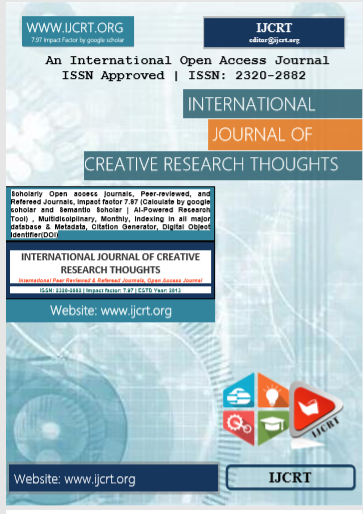
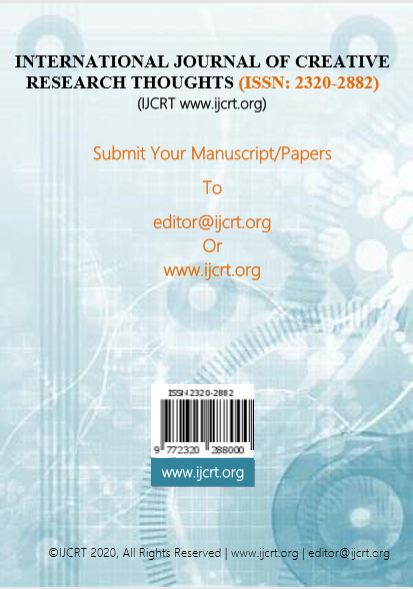
| IJCRT Journal front page | IJCRT Journal Back Page |
Paper Title: ASL Alphabet Recognition System Using Machine Learning
Author Name(s): Pravin More, Neha Gaikwad, Prathamesh Ghadage, Vaishnavi Kumbhar, Akash Mane
Published Paper ID: - IJCRT2407064
Register Paper ID - 264743
Publisher Journal Name: IJPUBLICATION, IJCRT
DOI Member ID: 10.6084/m9.doi.one.IJCRT2407064 and DOI :
Author Country : Indian Author, India, 416301 , Ashta, 416301 , | Research Area: Science and Technology Published Paper URL: http://ijcrt.org/viewfull.php?&p_id=IJCRT2407064 Published Paper PDF: download.php?file=IJCRT2407064 Published Paper PDF: http://www.ijcrt.org/papers/IJCRT2407064.pdf
Your Paper Publication Details:
Title: ASL ALPHABET RECOGNITION SYSTEM USING MACHINE LEARNING
DOI (Digital Object Identifier) :
Pubished in Volume: 12 | Issue: 7 | Year: July 2024
Publisher Name : IJCRT | www.ijcrt.org | ISSN : 2320-2882
Subject Area: Science and Technology
Author type: Indian Author
Pubished in Volume: 12
Issue: 7
Pages: a489-a493
Year: July 2024
Downloads: 250
E-ISSN Number: 2320-2882
Abstract
An ASL (American Sign Language) recognition system that employs machine learning is an innovative technology designed contribute to bridging the communication gap that exists between the environment and the deaf difficult of hearing persons. This system utilizes advanced algorithms and neural networks to analyze the intricate in body postures, facial gestures, and hand movements that make up sign language. By processing video or sensor data of sign language users, the machine learning model can identify and interpret these gestures, subsequently converting them into written text. The potential impact of such a system is profound. It enables those who use sign language as their primary mode of communication to interact with computers, smartphones, and other devices more seamlessly. Additionally, it facilitates better communication with individuals who do not understand sign language, as the system can bridge the language barrier by providing real-time translations.This technology promotes inclusivity and accessibility, ultimately enriching the lives of individuals with hearing impairments and fostering a more connected and understanding society. As machine learning and artificial intelligence continue to advance, so too does the potential for ASL recognition systems to become even more accurate and widespread in their applications.
Licence: creative commons attribution 4.0
License
Creative Commons Attribution 4.0 and The Open Definition

Keywords
Sign Language Recognition, Deep Learning, American sign language, Hand Gesture.
License
Creative Commons Attribution 4.0 and The Open Definition
Paper Title: New Age Indian Manager: Analysis of Changed Management Dynamics and their Ramifications
Author Name(s): Birinderjit Singh Bhangoo
Published Paper ID: - IJCRT2407063
Register Paper ID - 265094
Publisher Journal Name: IJPUBLICATION, IJCRT
DOI Member ID: 10.6084/m9.doi.one.IJCRT2407063 and DOI :
Author Country : Indian Author, India, 160062 , SAS Nagar, Mohali, 160062 , | Research Area: Management All Published Paper URL: http://ijcrt.org/viewfull.php?&p_id=IJCRT2407063 Published Paper PDF: download.php?file=IJCRT2407063 Published Paper PDF: http://www.ijcrt.org/papers/IJCRT2407063.pdf
Your Paper Publication Details:
Title: NEW AGE INDIAN MANAGER: ANALYSIS OF CHANGED MANAGEMENT DYNAMICS AND THEIR RAMIFICATIONS
DOI (Digital Object Identifier) :
Pubished in Volume: 12 | Issue: 7 | Year: July 2024
Publisher Name : IJCRT | www.ijcrt.org | ISSN : 2320-2882
Subject Area: Management All
Author type: Indian Author
Pubished in Volume: 12
Issue: 7
Pages: a483-a488
Year: July 2024
Downloads: 227
E-ISSN Number: 2320-2882
Abstract
There is no denial that India is becoming a hotspot for any organization planning to expand their footprint owing to the booming market up for grabs. But to gain a share of this pie is no easy feat, as managing a diverse workforce such as in India to achieve their business goals requires an able middle management. One which understands the changing work dynamics and adapts their strategy to transform into results. The onset of the post liberalization India certainly paved way for the business and management skills to get their due importance, they were predominantly focused on local periphery of sales and operations with organizational culture and other factors taking a backseat. But three decades later, today India's managerial diaspora is making a pivotal transition into a powerhouse and is now competing at global stage, displaying their calibre through leadership and senior management roles. One such major instance is the study conducted by PricewaterhouseCoopers (PwC) on how Indian-origin CEOs are making their mark on the global stage, with 10% of the CEOs in the Fortune Global 500 companies being of Indian descent. This empirical evidence showcases the significant impact this new cohort of management have in shaping the global business landscape. This number is only bound to grow as the new age Indian manager is at the forefront of this change, adapting strategies to navigate these dynamics effectively. This paper analyses the ramifications of these shifts in management practices, exploring the changes in management approaches, strategies adopted by managers, and the subsequent impacts on organizations and employees.
Licence: creative commons attribution 4.0
License
Creative Commons Attribution 4.0 and The Open Definition
Keywords
Management Practices, Strategies Organizational Culture, Agile, Technologies, India
License
Creative Commons Attribution 4.0 and The Open Definition
Paper Title: GENDER JUSTICE: LEGAL STATUS OF NON-BINARY IN INDIAN SOCIETY
Author Name(s): Pratiksha Singh, Shruti Mishra
Published Paper ID: - IJCRT2407062
Register Paper ID - 265011
Publisher Journal Name: IJPUBLICATION, IJCRT
DOI Member ID: 10.6084/m9.doi.one.IJCRT2407062 and DOI :
Author Country : Indian Author, India, 209801 , Unnao, 209801 , | Research Area: Science and Technology Published Paper URL: http://ijcrt.org/viewfull.php?&p_id=IJCRT2407062 Published Paper PDF: download.php?file=IJCRT2407062 Published Paper PDF: http://www.ijcrt.org/papers/IJCRT2407062.pdf
Your Paper Publication Details:
Title: GENDER JUSTICE: LEGAL STATUS OF NON-BINARY IN INDIAN SOCIETY
DOI (Digital Object Identifier) :
Pubished in Volume: 12 | Issue: 7 | Year: July 2024
Publisher Name : IJCRT | www.ijcrt.org | ISSN : 2320-2882
Subject Area: Science and Technology
Author type: Indian Author
Pubished in Volume: 12
Issue: 7
Pages: a474-a482
Year: July 2024
Downloads: 253
E-ISSN Number: 2320-2882
Abstract
The term third gender describes about individuals who identify as exclusively masculine or feminine termed as Non-binary. Non-binary means that we can't identify them as totally masculine or feminine, rather somewhere in between or totally different. Non-binary community in India is an important part of society. Even law cannot deny their existence and constitution also guarantees the third gender have their basic right like Right to dignity, Personal liberty, Educational freedom of expression etc. These individuals are generally denied by their family and society too. The study also covers that the third gender is excluded from the society and what the law and order is doing to convert that social exclusion into social inclusion. People of non-binary category face severe discrimination and harassment in all respect of contemporary India. They are subjected to unfair treatments like verbal abuse, physical and sexual violence, false arrests, denial of share in their ancestral property, services and admissions to educational institutions and victimization in family, institution, workplace etc. The golden threads that run through the equality scheme of the Indian Constitution (Act 14, 15, 16, 19 and 21) is enjoyment of life by all citizens and equal opportunity to grow as human being in irrespective of their race, caste, religion, community, social status and gender. Recently, in the wake of 'Nalsa judgment', the Indian parliament enacted The Transgender Persons (Protection of Rights) Act, 2019.
Licence: creative commons attribution 4.0
License
Creative Commons Attribution 4.0 and The Open Definition
Keywords
NON-Binary, Sexual-violence, Social exclusion, Social inclusion, Harassment.
License
Creative Commons Attribution 4.0 and The Open Definition
Paper Title: USING DIRECT INSTRUCTION TO HELP TRIBAL PEOPLE LEARN ENGLISH BETTER
Author Name(s): R,Poovazhagan, Dr. P.Vijaya M.A.,P.hD.
Published Paper ID: - IJCRT2407061
Register Paper ID - 264602
Publisher Journal Name: IJPUBLICATION, IJCRT
DOI Member ID: 10.6084/m9.doi.one.IJCRT2407061 and DOI :
Author Country : Indian Author, India, - , -, - , | Research Area: Science and Technology Published Paper URL: http://ijcrt.org/viewfull.php?&p_id=IJCRT2407061 Published Paper PDF: download.php?file=IJCRT2407061 Published Paper PDF: http://www.ijcrt.org/papers/IJCRT2407061.pdf
Your Paper Publication Details:
Title: USING DIRECT INSTRUCTION TO HELP TRIBAL PEOPLE LEARN ENGLISH BETTER
DOI (Digital Object Identifier) :
Pubished in Volume: 12 | Issue: 7 | Year: July 2024
Publisher Name : IJCRT | www.ijcrt.org | ISSN : 2320-2882
Subject Area: Science and Technology
Author type: Indian Author
Pubished in Volume: 12
Issue: 7
Pages: a467-a473
Year: July 2024
Downloads: 217
E-ISSN Number: 2320-2882
Abstract
Indian education faces a serious threat as a result of the low literacy rate among Scheduled Tribes. It is important for Tamilnadu, the state with the highest literacy rate, as well. The power of the issue is reflected in the March 2010 SSLC (Secondary School Leaving Certificate) exam results where the Nilgiris locale has scored the less pass level of 81.04. The growth in the Nilgiris's schools have a high rate of dropouts and failures, which is cited as a major cause of fall by teachers and defenders of the State. Nilgiris is the location of a pilot study, the most tribal region of Nilgiris District with a low level of education. The lack of English proficiency Language is cited as a significant barrier to Schedule Tribe students' education. The Students develop a negative attitude as a result of an inappropriate English curriculum and teaching method. toward education. One of the factors that prevents them from learning a foreign language is the fear of education because proficiency in English is required rather than optional at higher levels. It is clear that ancestral students are not propelled well. They struggle to adjust to school. educational plan and instructing of English language. Despite the fact that the government can provide grants and scholarships for the benefit of students, with the obligation of fostering their educational growth are ultimately the responsibility of educators. The pilot study that was carried out in order to figure out the instructive backwardness of ancestral students with unique reference to English language. It portrays the language learning issues of ancestral students and breaks down the causes of being behind. An enormous number of denied gatherings of populace in India stay unfit to take part in the course of Nation's turn of events and has impacted the nation's speed of financial development. It is extreme on account of Clans, who are socially and monetarily underestimated. The social hardship of gathering is reflected in their instructive backwardness. Despite the numerous initiatives taken by governments to address tribal educational disadvantage, the vast majority of ancestral populace in India stay outside the school system. However youngsters are getting fewer students complete their education than those who are enrolled. The rise in the number of quitters is a significant issue winning in schools of ancestral regions. An examination of higher education in the nation, led by Seasons of India (August 2012) uncovers that the Gross Enrolment Proportion (GER) among Scheduled Tribes is appalling at 4.4%. The outcome reports that Tribals are slacking behind in advanced education.
Licence: creative commons attribution 4.0
License
Creative Commons Attribution 4.0 and The Open Definition
Keywords
Tribal, Students, English, Education, Issues, and Prospects
License
Creative Commons Attribution 4.0 and The Open Definition
Paper Title: The Struggle for Right to Shelter of Slum Dwellers in India
Author Name(s): Yashodhara Pattanaik
Published Paper ID: - IJCRT2407060
Register Paper ID - 264961
Publisher Journal Name: IJPUBLICATION, IJCRT
DOI Member ID: 10.6084/m9.doi.one.IJCRT2407060 and DOI :
Author Country : Indian Author, India, 753013 , Cuttack, 753013 , | Research Area: Medical Science All Published Paper URL: http://ijcrt.org/viewfull.php?&p_id=IJCRT2407060 Published Paper PDF: download.php?file=IJCRT2407060 Published Paper PDF: http://www.ijcrt.org/papers/IJCRT2407060.pdf
Your Paper Publication Details:
Title: THE STRUGGLE FOR RIGHT TO SHELTER OF SLUM DWELLERS IN INDIA
DOI (Digital Object Identifier) :
Pubished in Volume: 12 | Issue: 7 | Year: July 2024
Publisher Name : IJCRT | www.ijcrt.org | ISSN : 2320-2882
Subject Area: Medical Science All
Author type: Indian Author
Pubished in Volume: 12
Issue: 7
Pages: a460-a466
Year: July 2024
Downloads: 255
E-ISSN Number: 2320-2882
Abstract
Food, clothing and shelter (roti, kapda aur makan) are the three most basic needs for every human being that exists and these needs are from time immemorial. The right to shelter is a basic human right that helps houseless citizen gets a secure living structure along with access to basic amenities. Right to shelter does not just mean being provided with a structure, it also means the structure is in a safe and livable condition where one can have access to basic amenities and grow his life and family; in short, a life with dignity. This shelter issue is not just a debatable topic in India, but in many parts of the globe. The right to shelter is a fundamental right of any human, the most basic need of any man or woman in existance. The low-wage group or economically weaker section of people dream so too but making it a reality is a struggle for them. Slum dwellers come in this group and they are amongst the most vulnerable members of our society. Recognition of their basic fundamental right relating to shelter and livelihood is done by the judiciary but there always exists some disparity that keeps on violating their rights time and again. Until a strong help from the legislative body is not received they will continue struggling for their rights with their hopes intact.
Licence: creative commons attribution 4.0
License
Creative Commons Attribution 4.0 and The Open Definition
Keywords
slum, slum dwellers, development, right to shelter.
License
Creative Commons Attribution 4.0 and The Open Definition
Paper Title: Unveiling Tradition and Empowerment in The Henna Artist by Alka Joshi
Author Name(s): Harshita
Published Paper ID: - IJCRT2407059
Register Paper ID - 264989
Publisher Journal Name: IJPUBLICATION, IJCRT
DOI Member ID: 10.6084/m9.doi.one.IJCRT2407059 and DOI :
Author Country : Indian Author, India, 124001 , Rohtak, 124001 , | Research Area: Medical Science All Published Paper URL: http://ijcrt.org/viewfull.php?&p_id=IJCRT2407059 Published Paper PDF: download.php?file=IJCRT2407059 Published Paper PDF: http://www.ijcrt.org/papers/IJCRT2407059.pdf
Your Paper Publication Details:
Title: UNVEILING TRADITION AND EMPOWERMENT IN THE HENNA ARTIST BY ALKA JOSHI
DOI (Digital Object Identifier) :
Pubished in Volume: 12 | Issue: 7 | Year: July 2024
Publisher Name : IJCRT | www.ijcrt.org | ISSN : 2320-2882
Subject Area: Medical Science All
Author type: Indian Author
Pubished in Volume: 12
Issue: 7
Pages: a456-a459
Year: July 2024
Downloads: 277
E-ISSN Number: 2320-2882
Abstract
This term paper explores The Henna Artist by Alka Joshi is a captivating novel that takes readers on a journey through 1950s India, exploring themes of identity, tradition, and resilience. Set against the backdrop of a rapidly changing society, the novel follows the story of Lakshmi, a talented henna artist who navigates the complexities of her past while forging a new path for herself in the bustling city of Jaipur. Through Lakshmi's experiences, Joshi paints a vivid portrait of a nation in transition, grappling with the clash between tradition and modernity, caste and class, and the quest for personal freedom. Readers are transported to the colorful and dynamic world of 1950s India, where tradition, identity, and resilience intersect in profound ways. This concept paper seeks to delve deeper into the novel's exploration of cultural dynamics and personal transformation, highlighting the multifaceted layers of the narrative.
Licence: creative commons attribution 4.0
License
Creative Commons Attribution 4.0 and The Open Definition
Keywords
Postcolonial, Independence, Culture, Rajasthan, Jaipur, Heena, Self-discovery
License
Creative Commons Attribution 4.0 and The Open Definition
Paper Title: Sustainable Horticulture Practices in Himachal Pradesh: An Overview
Author Name(s): Pankaj Thakur, Dr. Kusum Lata Azad
Published Paper ID: - IJCRT2407058
Register Paper ID - 265028
Publisher Journal Name: IJPUBLICATION, IJCRT
DOI Member ID: 10.6084/m9.doi.one.IJCRT2407058 and DOI :
Author Country : Indian Author, India, - , -, - , | Research Area: Science and Technology Published Paper URL: http://ijcrt.org/viewfull.php?&p_id=IJCRT2407058 Published Paper PDF: download.php?file=IJCRT2407058 Published Paper PDF: http://www.ijcrt.org/papers/IJCRT2407058.pdf
Your Paper Publication Details:
Title: SUSTAINABLE HORTICULTURE PRACTICES IN HIMACHAL PRADESH: AN OVERVIEW
DOI (Digital Object Identifier) :
Pubished in Volume: 12 | Issue: 7 | Year: July 2024
Publisher Name : IJCRT | www.ijcrt.org | ISSN : 2320-2882
Subject Area: Science and Technology
Author type: Indian Author
Pubished in Volume: 12
Issue: 7
Pages: a449-a455
Year: July 2024
Downloads: 263
E-ISSN Number: 2320-2882
Abstract
Himachal Pradesh, situated in the lap of the Himalayas, boasts a rich diversity of horticultural crops due to its varied agro-climatic conditions. With a growing emphasis on sustainability, the state has been actively promoting and adopting sustainable horticulture practices to ensure environmental conservation and socio-economic development. This paper provides an overview of sustainable horticulture practices in Himachal Pradesh, focusing on key aspects such as organic farming, water management techniques, biodiversity conservation, and integrated pest management. It examines the challenges faced by farmers in adopting sustainable practices and highlights various initiatives undertaken by the government and non-governmental organizations to promote sustainability in horticulture. Additionally, the paper discusses the impact of sustainable horticulture practices on the livelihoods of farmers, biodiversity conservation, and the overall environmental sustainability of the region. This overview seeks to provide insights for future research and policy interventions in this important sector, as well as to improve awareness of the current condition of sustainable horticulture in Himachal Pradesh by a thorough analysis of existing literature and case study.
Licence: creative commons attribution 4.0
License
Creative Commons Attribution 4.0 and The Open Definition
Keywords
sustainable horticulture, biodiversity, conservation, environmental sustainability
License
Creative Commons Attribution 4.0 and The Open Definition
Paper Title: An Analytical Account of The Beginnings and Progress of Modern Education in Charing
Author Name(s): DR.BIDYANANDA BORKAKOTY
Published Paper ID: - IJCRT2407057
Register Paper ID - 264969
Publisher Journal Name: IJPUBLICATION, IJCRT
DOI Member ID: 10.6084/m9.doi.one.IJCRT2407057 and DOI :
Author Country : Indian Author, India, 785685 , Sivasagar, 785685 , | Research Area: Medical Science All Published Paper URL: http://ijcrt.org/viewfull.php?&p_id=IJCRT2407057 Published Paper PDF: download.php?file=IJCRT2407057 Published Paper PDF: http://www.ijcrt.org/papers/IJCRT2407057.pdf
Your Paper Publication Details:
Title: AN ANALYTICAL ACCOUNT OF THE BEGINNINGS AND PROGRESS OF MODERN EDUCATION IN CHARING
DOI (Digital Object Identifier) :
Pubished in Volume: 12 | Issue: 7 | Year: July 2024
Publisher Name : IJCRT | www.ijcrt.org | ISSN : 2320-2882
Subject Area: Medical Science All
Author type: Indian Author
Pubished in Volume: 12
Issue: 7
Pages: a442-a448
Year: July 2024
Downloads: 239
E-ISSN Number: 2320-2882
Abstract
ABSTRACT Charing is a famous region in Assam, located in the easternmost part of India. In ancient times, Assam included both mountains and plains. However, the political map of Assam changed a lot in the post-independence period. The present area of Charing is not as extensive as that described in history, but about 40 villages form the present larger Charing area. Charing has made indescribable contributions to the socio-economic, political, religious, educational, literary, cultural, scientific, commercial, etc. aspects of Assam and India. This research paper gives a comprehensive insight into an analytical account of the beginnings and progress of modern education in Charing.
Licence: creative commons attribution 4.0
License
Creative Commons Attribution 4.0 and The Open Definition
Keywords
Keywords: Hunter Commission, Democratic Values, Human Capital, Self-Reliant., Self-Proclaimed, Pedagogy, Behavioral, Emotional Integration, Sanskritization, Outcomes
License
Creative Commons Attribution 4.0 and The Open Definition
Paper Title: EXPERIMENTAL STUDY ON RECYCLED PLASTIC AS COARSE AGGREGATE FOR CONCRETE
Author Name(s): Prof. Prashant M. Maske, Rokade Shubham, Pattekari Safina, Khatavkar Rushikesh, Mane Nishant
Published Paper ID: - IJCRT2407056
Register Paper ID - 265076
Publisher Journal Name: IJPUBLICATION, IJCRT
DOI Member ID: 10.6084/m9.doi.one.IJCRT2407056 and DOI :
Author Country : Indian Author, India, 415311 , Vita, 415311 , | Research Area: Science and Technology Published Paper URL: http://ijcrt.org/viewfull.php?&p_id=IJCRT2407056 Published Paper PDF: download.php?file=IJCRT2407056 Published Paper PDF: http://www.ijcrt.org/papers/IJCRT2407056.pdf
Your Paper Publication Details:
Title: EXPERIMENTAL STUDY ON RECYCLED PLASTIC AS COARSE AGGREGATE FOR CONCRETE
DOI (Digital Object Identifier) :
Pubished in Volume: 12 | Issue: 7 | Year: July 2024
Publisher Name : IJCRT | www.ijcrt.org | ISSN : 2320-2882
Subject Area: Science and Technology
Author type: Indian Author
Pubished in Volume: 12
Issue: 7
Pages: a431-a441
Year: July 2024
Downloads: 231
E-ISSN Number: 2320-2882
Abstract
This study has been undertaken to Plastic waste is silent threat to the environment and their disposal is a serious issue for waste managers. Now a day society does not have any alternative to plastic products like plastic bags, plastic bottles, and plastic sheets etc. In spite of all efforts made to limit its use but unfortunately its utility is increasing day by day. To circumvent this issue many efforts were made in the past to reuse the plastic waste but no significant results were achieved. On contrary concrete being the widely used construction material is facing problem due to unavailability of construction material (Cement, sand and coarse aggregate). Various attempts were made through experimentation to check the feasibility of plastic waste to be use partially in concrete with respect to various properties of strength, workability, durability and ductility of concrete. This paper includes review of various studies conducted on utility of waste plastic material used in the concrete. Moreover this paper will draw our focus toward the impingement on the various properties of concrete when partially replacing with waste plastic.
Licence: creative commons attribution 4.0
License
Creative Commons Attribution 4.0 and The Open Definition
Keywords
Plastic waste, concrete, replace, testing, properties
License
Creative Commons Attribution 4.0 and The Open Definition
Paper Title: Digital Initiatives For Empowering Women Towards A Sustainable Future
Author Name(s): BUSHRA FARIDI, Dr. SHAHLA SHABEEH SHAHEEN
Published Paper ID: - IJCRT2407055
Register Paper ID - 265056
Publisher Journal Name: IJPUBLICATION, IJCRT
DOI Member ID: 10.6084/m9.doi.one.IJCRT2407055 and DOI : https://doi.org/10.5281/zenodo.13221732
Author Country : Indian Author, India, 202002 , ALIGARH, 202002 , | Research Area: Social Science All Published Paper URL: http://ijcrt.org/viewfull.php?&p_id=IJCRT2407055 Published Paper PDF: download.php?file=IJCRT2407055 Published Paper PDF: http://www.ijcrt.org/papers/IJCRT2407055.pdf
Your Paper Publication Details:
Title: DIGITAL INITIATIVES FOR EMPOWERING WOMEN TOWARDS A SUSTAINABLE FUTURE
DOI (Digital Object Identifier) : https://doi.org/10.5281/zenodo.13221732
Pubished in Volume: 12 | Issue: 7 | Year: July 2024
Publisher Name : IJCRT | www.ijcrt.org | ISSN : 2320-2882
Subject Area: Social Science All
Author type: Indian Author
Pubished in Volume: 12
Issue: 7
Pages: a422-a430
Year: July 2024
Downloads: 260
E-ISSN Number: 2320-2882
Abstract
Gender equality and sustainable development depend on women's digital empowerment. To close the gender gap in technology access and empower women, the Indian government has launched several digital projects. The Government of India's digital literacy efforts are pivotal in enabling women to have a sustainable future, promoting socio-economic inclusion, and mitigating gender gaps in digital technology access. This article thoroughly examines the panorama of contemporary digital literacy programmes for women in India. It seeks to evaluate their efficacy, pinpoint obstacles, and investigate viable fixes to enhance the results of digital literacy. The article thoroughly assesses secondary data from government websites and reliable sources, including reports and publications. This article aims to illuminate these issues and offer insights into the complex nature of the digital gender gap in India. The study also examines possible approaches and remedies to overcome these obstacles and raise women's digital literacy. To encourage digital inclusion and empowerment, these solutions include community-based strategies, the integration of mobile technologies, customized training courses, and focused awareness campaigns. This paper aims to inform policymakers, practitioners, and stakeholders about digital projects that empower women and promote a sustainable future. It thoroughly analyses available data and identifies key obstacles and opportunities. To bridge the digital gender gap and promote inclusive development, the article highlights the significance of digital literacy as a driver for women's socioeconomic empowerment.
Licence: creative commons attribution 4.0
License
Creative Commons Attribution 4.0 and The Open Definition
Keywords
Digital initiatives, women empowerment, Sustainable future, Digital literacy
License
Creative Commons Attribution 4.0 and The Open Definition
Call For Paper February 2026
Call For Papers
February 2026
Volume 14 | Issue 2
Last Date :
28-Feb-2026
Submit Manuscript Online Impact Factor: 7.97 Review Results : Within 02-03 Days Paper Publication : Within 02-03 Days
February 2026
Volume 14 | Issue 2
Last Date :
28-Feb-2026
Submit Manuscript Online Impact Factor: 7.97 Review Results : Within 02-03 Days Paper Publication : Within 02-03 Days
Published Issue Details
For Authors
Forms / Downloads
Other IMP Links
Indexing Partner
Research Area
LICENSE





ISSN and 7.97 Impact Factor Details

ISSN: 2320-2882 Impact Factor: 7.97 and ISSN APPROVED Journal Starting Year (ESTD) : 2013


ISSN and 7.97 Impact Factor Details
ISSN: 2320-2882 Impact Factor: 7.97 and ISSN APPROVED Journal Starting Year (ESTD) : 2013
DOI Details
CONFERENCE
CONFERENCE MANAGMENT & PUBLICATION CONFERENCE PROPOSAL
RECENT CONFERENCE

CONFERENCE PROPOSAL CONFERENCE PROCEEDINGS
CONFERENCE PROPOSAL CONFERENCE PROCEEDINGS
For Reviewer /Referral (RMS) Earn 500 per paper
Important Links
NEWS & Conference
Digital Library
IJCRT RMS | Earn 500 Per Paper.

Open Access


LICENSE
Indexing Partner
Scholarly open access journals, Peer-reviewed, and Refereed Journals, Impact factor 7.97 (Calculate by google scholar and Semantic Scholar | AI-Powered Research Tool) , Multidisciplinary, Monthly, Indexing in all major database & Metadata, Citation Generator, Digital Object Identifier(DOI)