Important Details
IJCRT - International Peer Reviewed, Open Access Journal, Multidisciplinary, Monthly, Nominal(Low) Fees for Professional Research Services International Journal of Creative Research Thoughts - IJCRT Peer Review Journal, Refereed Journal, Peer Reviewed Journal , Referred Journal and Indexed Journal, Open access, Online and Print Journal,international Journal Open Access, Accepted by Indian and foreign university ,IJCRT Followed Norms, guidelines, requirement, listing criteria and methodology of score/point also applied from: Scopus , Web of Science , UGC Approved , UGC CARE, UGC-CARE .
UGC Approved Journal No: 49023 (18)
UGC approval Link
https://ijcrt.org/ugc%20approval.jpg
All Policy and Approval
Please Like Our Facebook Page | CrossRef DOI and Hard copy of Certificate Provide if required. | www.IJCRT.org | editor@IJCRT.org | IJCRT WhatsApp +91 94294 58311
Publication Details:
- Paper Submission : 31-Aug-2026. Call For Paper (Volume 14 | Issue 8 | Month- August 2026)
- Acceptance/Rejection Notification: Within 02-04 Days.
- Paper Publish: Within 02-04 Days after submitting all documents.
-
Submit Your Paper Any time There No deadline.
-
Publication fees : 1570 INR for Indian author & 59$ for foreign International author.
Please Like Our Facebook Page | CrossRef DOI and Hard copy of Certificate Provide if required.
Licence and Indexing
Indexing In Google Scholar, SSRN, ResearcherID-Publons, Semantic Scholar | AI-Powered Research Tool, Microsoft Academic, Academia.edu, arXiv.org, Research Gate, CiteSeerX, ResearcherID Thomson Reuters, Mendeley : reference manager, DocStoc, ISSUU, Scribd, and many more | High Impact Factor: 7.97 | Digital object identifier (DOI) and Hard Copy of certificate Provided.




























Licence
DOI
ISSN Approved impact factor: 7.97 
Creative Common 
Valid as per new UGC Gazette regulations 

INTERNATIONAL JOURNAL OF CREATIVE RESEARCH THOUGHTS - IJCRT (IJCRT.ORG)
International Peer Reviewed & Refereed Journals, Open Access Journal
IJCRT Peer-Reviewed (Refereed) Journal as Per New UGC Rules.
ISSN Approved Journal No: 2320-2882 | Impact factor: 7.97 | ESTD Year: 2013
Call For Paper - Volume 14 | Issue 8 | Month- August 2026
Scholarly open access journals, Peer-reviewed, and Refereed Journals, Impact factor 7.97 (Calculate by google scholar and Semantic Scholar | AI-Powered Research Tool) , Multidisciplinary, Monthly, Indexing in all major database & Metadata, Citation Generator, Digital Object Identifier(CrossRef DOI)
IJCRT WhatsApp Contact
IJCRT Search Xplore - Search all paper by Paper Name , Author Name, and Title
Volume 14 | Issue 6 |
Volume 14 | Issue 6 | Month
Downlaod After Publication 1) Table of content index in PDF
2) Table of content index in HTML 2)Table of content index in HTML
3) Front Page 3) Front Page
4) Back Page 4) Back Page
5) Editor Board Member 5)Editor Board Member
6) OLD Style Issue 6)OLD Style Issue
 |
 |
|---|---|
| IJCRT Journal front page | IJCRT Journal Back Page |
Paper Title: A Comprehensive Cost Analysis of Eco-Engineered Self Compacting Concrete Using MWP,M-Sand,and PolyPropylene Fibers
Author Name(s): O.Ankamma Raju, Dr T V S Vara Lakshmi
Published Paper ID: - IJCRT2606307
Register Paper ID - 309707
Publisher Journal Name: IJPUBLICATION, IJCRT
DOI Member ID: 10.6084/m9.doi.one.IJCRT2606307 and DOI : https://doi.org/10.56975/ijcrt.v14i6.309707
Author Country : Indian Author, India, 522019 , guntur, 522019 , | Research Area: Science and Technology Published Paper URL: http://ijcrt.org/viewfull.php?&p_id=IJCRT2606307 Published Paper PDF: download.php?file=IJCRT2606307 Published Paper PDF: http://www.ijcrt.org/papers/IJCRT2606307.pdf
Your Paper Publication Details:
Title: A COMPREHENSIVE COST ANALYSIS OF ECO-ENGINEERED SELF COMPACTING CONCRETE USING MWP,M-SAND,AND POLYPROPYLENE FIBERS
DOI (Digital Object Identifier) : https://doi.org/10.56975/ijcrt.v14i6.309707
Pubished in Volume: 14 | Issue: 6 | Year: June 2026
Publisher Name : IJCRT | www.ijcrt.org | ISSN : 2320-2882
Subject Area: Science and Technology
Author type: Indian Author
Pubished in Volume: 14
Issue: 6
Pages: c742-c746
Year: June 2026
Downloads: 89
E-ISSN Number: 2320-2882
Abstract
Abstract: Self Compacting Concrete (SCC) was developed in Japan during the late 1980s as an innovative solution to counter labor shortages and address inconsistencies in concrete placement quality. Its exceptional flowability and ability to fill complex formwork without the need for mechanical vibration have revolutionized modern construction practices, offering improved surface finishes and uniformity. While numerous studies have explored its mechanical and durability properties, the economic implications of SCC particularly the cost variations introduced by material choices remain less studied. This research focuses on comparing the material costs between nominal SCC mixes and those incorporating polypropylene fibers. By assessing these cost factors, the study aims to evaluate the financial viability of fiber-reinforced SCC in practical applications. The analysis will provide a comprehensive understanding of both the economic and performance-related aspects of SCC. The findings are expected to aid contractors, engineers, and decision-makers in choosing more efficient and cost-effective concrete solutions for future construction projects.
Licence: creative commons attribution 4.0
License
Creative Commons Attribution 4.0 and The Open Definition

Keywords
Key words- Self Compacting Concrete, Form Work, Concrete, Poly Propylene fibers,Construction.
License
Creative Commons Attribution 4.0 and The Open Definition
Paper Title: Basti Marma: Integrating Ayurvedic Concepts with Modern Anatomical Insights
Author Name(s): Dr. Arathi Devi A, Dr. Swapna Kumary
Published Paper ID: - IJCRT2606306
Register Paper ID - 310310
Publisher Journal Name: IJPUBLICATION, IJCRT
DOI Member ID: 10.6084/m9.doi.one.IJCRT2606306 and DOI :
Author Country : Indian Author, India, - , -, - , | Research Area: Humanities All Published Paper URL: http://ijcrt.org/viewfull.php?&p_id=IJCRT2606306 Published Paper PDF: download.php?file=IJCRT2606306 Published Paper PDF: http://www.ijcrt.org/papers/IJCRT2606306.pdf
Your Paper Publication Details:
Title: BASTI MARMA: INTEGRATING AYURVEDIC CONCEPTS WITH MODERN ANATOMICAL INSIGHTS
DOI (Digital Object Identifier) :
Pubished in Volume: 14 | Issue: 6 | Year: June 2026
Publisher Name : IJCRT | www.ijcrt.org | ISSN : 2320-2882
Subject Area: Humanities All
Author type: Indian Author
Pubished in Volume: 14
Issue: 6
Pages: c736-c741
Year: June 2026
Downloads: 70
E-ISSN Number: 2320-2882
Abstract
Basti Marma, described in classical Ayurvedic texts as one among the three seats of Prana (vital force), corresponds anatomically to the urinary bladder. Basti Marma is classified as a Sadhyo Pranahara Marma, indicating a vital site where severe injury can lead to immediate loss of life. Basti Marma has been extensively detailed in the brihatrayi's. The Ayurvedic descriptions of Viddha Lakshanas demonstrate remarkable accordance with contemporary clinical presentations of bladder rupture, peritonitis, septicemia and death. This review underscores the relevance of Marma in modern clinical contexts and highlights the scientific basis of anatomical concepts. This article explores the concept of Basti Marma through classical Ayurvedic literature and its relevance in the modern anatomy and surgery. By correlating traditional descriptions with contemporary understanding of urinary bladder anatomy and bladder trauma, it aims to provide an integrative perspective on the clinical significance of Basti Marma.
Licence: creative commons attribution 4.0
License
Creative Commons Attribution 4.0 and The Open Definition
Keywords
Marma, Basti Marma, Urinary Bladder, Sadhyopranahara, Viddha Lakshana
License
Creative Commons Attribution 4.0 and The Open Definition
Paper Title: GENDER-BASED VIOLENCE AS A HUMAN SECURITY CHALLENGE: IMPLICATIONS FOR WOMEN'S HEALTH OUTCOMES IN MAYURBHANJ DISTRICT, ODISHA
Author Name(s): Bidisha Panda
Published Paper ID: - IJCRT2606305
Register Paper ID - 310374
Publisher Journal Name: IJPUBLICATION, IJCRT
DOI Member ID: 10.6084/m9.doi.one.IJCRT2606305 and DOI : https://doi.org/10.56975/ijcrt.v14i6.310374
Author Country : Indian Author, India, 751013 , Bhubaneswar, 751013 , | Research Area: Social Science All Published Paper URL: http://ijcrt.org/viewfull.php?&p_id=IJCRT2606305 Published Paper PDF: download.php?file=IJCRT2606305 Published Paper PDF: http://www.ijcrt.org/papers/IJCRT2606305.pdf
Your Paper Publication Details:
Title: GENDER-BASED VIOLENCE AS A HUMAN SECURITY CHALLENGE: IMPLICATIONS FOR WOMEN'S HEALTH OUTCOMES IN MAYURBHANJ DISTRICT, ODISHA
DOI (Digital Object Identifier) : https://doi.org/10.56975/ijcrt.v14i6.310374
Pubished in Volume: 14 | Issue: 6 | Year: June 2026
Publisher Name : IJCRT | www.ijcrt.org | ISSN : 2320-2882
Subject Area: Social Science All
Author type: Indian Author
Pubished in Volume: 14
Issue: 6
Pages: c718-c735
Year: June 2026
Downloads: 86
E-ISSN Number: 2320-2882
Abstract
Gender-based violence (GBV) is a serious violation of human rights and an important public health concern that greatly affects the women's health outcomes and human security, especially in the tribal areas of India. This secondary data study looks into the intricate consequences of GBV on the health and security of women in the Mayurbhanj District of Odisha, a largely tribal region with considerable health disparities. This study synthesizes evidence on the prevalence, health implications, and structural factors of GBV among women in Mayurbhanj, using nationally representative data sets, official health surveys, and qualitative evidence from the district. Results indicate that around 30-45% of ever-married women in Odisha experience intimate partner violence, with possibly higher rates in tribal-dominated regions such as Mayurbhanj. GBV transforms into physical injuries, chronic pain, reproductive health problems, and negative reproductive health outcomes, including miscarriage, stillbirth, and delivery-related issues. Mental health sequelae include depression (prevalence odds ratio: 2.04-3.14), post-traumatic stress disorder (OR: 2.15-2.66), and suicidal ideation (OR: 2.17-5.52). The intersectionality of tribal status, poverty, lack of access to health care, and patriarchal gender norms further worsens vulnerability. This health burden is sustained by structural constraints like low institutional capacity, inadequate screening systems, and insufficient psychosocial support services. The study uses the Human Security Framework, intersectionality theory, and the Social Determinants of Health model to assess pathways via which GBV undermines women's autonomy, health agency, and community security. The findings emphasize the urgent need to implement gender-transformative interventions that include health systems strengthening, community mobilization, and rights-based methods in accordance with India's Sustainable Development Goal 5 objectives.
Licence: creative commons attribution 4.0
License
Creative Commons Attribution 4.0 and The Open Definition
Keywords
: Gender-Based Violence, Intimate Partner Violence, Women's Health, Human Security, Tribal Populations, Mayurbhanj District, Odisha
License
Creative Commons Attribution 4.0 and The Open Definition
Paper Title: Artificial Intelligence and Data Privacy: Challenges under Indian Cyber Laws
Author Name(s): Swati Pal, Dr. Purnima Chaudhary
Published Paper ID: - IJCRT2606304
Register Paper ID - 310104
Publisher Journal Name: IJPUBLICATION, IJCRT
DOI Member ID: 10.6084/m9.doi.one.IJCRT2606304 and DOI :
Author Country : Indian Author, India, 201009 , Ghaziabad, 201009 , | Research Area: Other area not in list Published Paper URL: http://ijcrt.org/viewfull.php?&p_id=IJCRT2606304 Published Paper PDF: download.php?file=IJCRT2606304 Published Paper PDF: http://www.ijcrt.org/papers/IJCRT2606304.pdf
Your Paper Publication Details:
Title: ARTIFICIAL INTELLIGENCE AND DATA PRIVACY: CHALLENGES UNDER INDIAN CYBER LAWS
DOI (Digital Object Identifier) :
Pubished in Volume: 14 | Issue: 6 | Year: June 2026
Publisher Name : IJCRT | www.ijcrt.org | ISSN : 2320-2882
Subject Area: Other area not in list
Author type: Indian Author
Pubished in Volume: 14
Issue: 6
Pages: c709-c717
Year: June 2026
Downloads: 151
E-ISSN Number: 2320-2882
Abstract
In the era of the digital economy, personal data has emerged as the most valuable asset, with the exponential growth of Artificial Intelligence (AI) technologies in various fields, such as healthcare, finance, governance, and law enforcement, also creating significant threats to individual privacy and civil liberties. India has seen cybersecurity incidents rise from 10.29 lakh in 2022 to 22.68 lakh in 2024, marking a turning point in the country. This paper critically analyses the interplay of AI and data privacy in the context of the existing cyber laws in India, namely, Information Technology Act, 2000, Digital Personal Data Protection Act, 2023, IT (Intermediary Guidelines) Rules, 2021 and CERT-In Directives, 2022. It highlights the lack of automated decision-making rights, algorithmic transparency requirements, and governance of non-personal aggregated data and compares the Indian regime with the EU General Data Protection Regulation (GDPR) and EU AI Act, 2024. Based on this empirical incident data, this paper offers a roadmap for reform of the regulatory environment that includes a regulatory framework specifically for AI, mandatory algorithm auditing, rationalisation of data localisation and the creation of a dedicated AI regulatory body. The study highlights the importance of embedding privacy considerations into the design of their AI systems and the need for responsible AI governance to ensure that India can fulfill its goals as a global powerhouse of AI.
Licence: creative commons attribution 4.0
License
Creative Commons Attribution 4.0 and The Open Definition
Keywords
Artificial Intelligence, Data Privacy, Indian Cyber Laws, IT Act 2000, DPDP Act 2023, Algorithmic Governance, GDPR, Cybersecurity, Deepfakes, Right to Privacy.
License
Creative Commons Attribution 4.0 and The Open Definition
Paper Title: Analysis and Comparison of Machine Learning Methods for Crime Hotspot Detection
Author Name(s): Dr Samit Kumar Singh, Dr P Suresh Kumar, Dr B Raja Narender, Dr M Sandhya Rani
Published Paper ID: - IJCRT2606303
Register Paper ID - 310202
Publisher Journal Name: IJPUBLICATION, IJCRT
DOI Member ID: 10.6084/m9.doi.one.IJCRT2606303 and DOI : https://doi.org/10.56975/ijcrt.v14i6.310202
Author Country : Indian Author, India, 506002 , warangal , 506002 , | Research Area: Science and Technology Published Paper URL: http://ijcrt.org/viewfull.php?&p_id=IJCRT2606303 Published Paper PDF: download.php?file=IJCRT2606303 Published Paper PDF: http://www.ijcrt.org/papers/IJCRT2606303.pdf
Your Paper Publication Details:
Title: ANALYSIS AND COMPARISON OF MACHINE LEARNING METHODS FOR CRIME HOTSPOT DETECTION
DOI (Digital Object Identifier) : https://doi.org/10.56975/ijcrt.v14i6.310202
Pubished in Volume: 14 | Issue: 6 | Year: June 2026
Publisher Name : IJCRT | www.ijcrt.org | ISSN : 2320-2882
Subject Area: Science and Technology
Author type: Indian Author
Pubished in Volume: 14
Issue: 6
Pages: c698-c708
Year: June 2026
Downloads: 83
E-ISSN Number: 2320-2882
Abstract
Licence: creative commons attribution 4.0
License
Creative Commons Attribution 4.0 and The Open Definition
Keywords
Crime Analysis, Machine Learning, Prediction, Data Mining.
License
Creative Commons Attribution 4.0 and The Open Definition
Paper Title: APPLICATION OF GEO SYNTHETIC IN FLEXIBLE PAVEMENT
Author Name(s): Mulla Riyaz Ahmed Jaweed Ahmed, Dalvi Rohit Ganesh, Otari Madhusudan Narayan
Published Paper ID: - IJCRT2606302
Register Paper ID - 310337
Publisher Journal Name: IJPUBLICATION, IJCRT
DOI Member ID: 10.6084/m9.doi.one.IJCRT2606302 and DOI :
Author Country : Indian Author, India, 413008 , Solapur, 413008 , | Research Area: Science and Technology Published Paper URL: http://ijcrt.org/viewfull.php?&p_id=IJCRT2606302 Published Paper PDF: download.php?file=IJCRT2606302 Published Paper PDF: http://www.ijcrt.org/papers/IJCRT2606302.pdf
Your Paper Publication Details:
Title: APPLICATION OF GEO SYNTHETIC IN FLEXIBLE PAVEMENT
DOI (Digital Object Identifier) :
Pubished in Volume: 14 | Issue: 6 | Year: June 2026
Publisher Name : IJCRT | www.ijcrt.org | ISSN : 2320-2882
Subject Area: Science and Technology
Author type: Indian Author
Pubished in Volume: 14
Issue: 6
Pages: c691-c697
Year: June 2026
Downloads: 65
E-ISSN Number: 2320-2882
Abstract
Roads in India have mostly the problems like the formation of potholes, ruts, cracks and localized depression and settlement, especially during rainy season. These are mainly due to the insufficient bearing capacity of the subgrade in water-saturated condition. The subgrade soil mostly yields low CBR value 2-5%. In the CBR method of pavement design (IRC:37-2012) the total thickness of pavement increases exponentially with a decrease in the CBR value of subgrade soil which in turn increases the cost of construction. So, it has been tried to use then geogrid material for increasing the bearing capacity of the subgrade. Laboratory CBR tests are conducted on soil samples with and without the inclusion of geogrid layer and also by varying the position of it in the mould use of geogrid increases the CBR value of the subgrade and there by reduces the pavement thickness considerably up to 40%. As on 31st march 2018, estimates the total road length in India 6,603,293km (4,103,096 mi) making the Indian road network, the second largest road network in the world after the united-states. But the roads are not giving the desired result due to poor CBR value. This study will have a positive impact on cost, as it will reduce the project as well as maintenance cost of the road. Our project will discuss in detail the process and its successful applications.
Licence: creative commons attribution 4.0
License
Creative Commons Attribution 4.0 and The Open Definition
Keywords
Geogrids, reinforcement, CBR value, flexible pavement, subgrade,
License
Creative Commons Attribution 4.0 and The Open Definition
Paper Title: Design And Implementation Of Low Power Approximate Compressor For Balanced Error Accumulation In MAC Operator
Author Name(s): Ajith Kumar G, Dr. Vijaya Prakash A M
Published Paper ID: - IJCRT2606301
Register Paper ID - 310184
Publisher Journal Name: IJPUBLICATION, IJCRT
DOI Member ID: 10.6084/m9.doi.one.IJCRT2606301 and DOI :
Author Country : Indian Author, India, 560004 , Bengaluru, 560004 , | Research Area: Science and Technology Published Paper URL: http://ijcrt.org/viewfull.php?&p_id=IJCRT2606301 Published Paper PDF: download.php?file=IJCRT2606301 Published Paper PDF: http://www.ijcrt.org/papers/IJCRT2606301.pdf
Your Paper Publication Details:
Title: DESIGN AND IMPLEMENTATION OF LOW POWER APPROXIMATE COMPRESSOR FOR BALANCED ERROR ACCUMULATION IN MAC OPERATOR
DOI (Digital Object Identifier) :
Pubished in Volume: 14 | Issue: 6 | Year: June 2026
Publisher Name : IJCRT | www.ijcrt.org | ISSN : 2320-2882
Subject Area: Science and Technology
Author type: Indian Author
Pubished in Volume: 14
Issue: 6
Pages: c683-c690
Year: June 2026
Downloads: 122
E-ISSN Number: 2320-2882
Abstract
This manuscript discusses the design of Low Power Approximate Compressors for Balanced Error Accumulation in MAC operators used in VLSI and Digital Signal Processing applications. Approximate 4:2 compressors are used in the partial product reduction stage of multiplier design to reduce hardware complexity, switching activity, and propagation delay while maintaining acceptable computational accuracy. The proposed 8-bit MAC architecture is designed using System Verilog and verified using Xilinx Vivado Design Suite. The performance analysis of the proposed architecture is evaluated in terms of timing performance, area utilization, LUTs, and slices. Experimental results show that the proposed approximate compressor-based MAC architecture reduces hardware complexity and improves speed performance compared to conventional exact MAC designs. Therefore, the proposed design is suitable for low power VLSI system applications.
Licence: creative commons attribution 4.0
License
Creative Commons Attribution 4.0 and The Open Definition
Keywords
Approximate Computing, MAC Operator, Approximate Compressor, Low Power Design, VLSI, Digital Signal Processing.
License
Creative Commons Attribution 4.0 and The Open Definition
Paper Title: Challenges and Struggle faced by Dalits in Karnataka Politics.
Author Name(s): YASHAVANTHA KUMAR H C, Prof. N MAMATHA
Published Paper ID: - IJCRT2606300
Register Paper ID - 310231
Publisher Journal Name: IJPUBLICATION, IJCRT
DOI Member ID: 10.6084/m9.doi.one.IJCRT2606300 and DOI :
Author Country : Indian Author, India, 570006 , MYSORE, 570006 , | Research Area: Medical Science All Published Paper URL: http://ijcrt.org/viewfull.php?&p_id=IJCRT2606300 Published Paper PDF: download.php?file=IJCRT2606300 Published Paper PDF: http://www.ijcrt.org/papers/IJCRT2606300.pdf
Your Paper Publication Details:
Title: CHALLENGES AND STRUGGLE FACED BY DALITS IN KARNATAKA POLITICS.
DOI (Digital Object Identifier) :
Pubished in Volume: 14 | Issue: 6 | Year: June 2026
Publisher Name : IJCRT | www.ijcrt.org | ISSN : 2320-2882
Subject Area: Medical Science All
Author type: Indian Author
Pubished in Volume: 14
Issue: 6
Pages: c674-c682
Year: June 2026
Downloads: 69
E-ISSN Number: 2320-2882
Abstract
Despite affirmative action laws and constitutional protections, the Dalits, who make up a sizable section of Karnataka's population, have always been on the periphery of political power. This essay explores the complex issues and ongoing difficulties that Dalits encounter in the political environment of Karnataka. Systemic obstacles still prevent meaningful representation, even with the rise of Dalit leaders, the creation of specialized political fronts like the Dalit Sangharsh Samiti, subsequent parties like the Bahujan Samaj Party, and many offshoot organizations. Caste-based discrimination within major political parties, upper-caste dominance in ticket distribution, political division among Dalit sub-castes (especially between the numerically powerful Madigas and the politically assertive Holeyas), and the co-optation of Dalit voices by mainstream parties without meaningful empowerment are some of the major issues. Dalit political mobilization is further hampered by social exclusion, economic marginalization, and violence. Both resilience and internal tensions are shown by historic movements like the Dalit Panther-inspired agitation of the 1970s and more current calls for internal reservations (like the Madiga Dandora movement). Although a small Dalit elite has been produced by reservation policies, the majority are still politically underrepresented and have little influence over the creation of laws pertaining to education, land reforms, and anti-atrocity measures.
Licence: creative commons attribution 4.0
License
Creative Commons Attribution 4.0 and The Open Definition
Keywords
Key Words: Scheduled Castes politics, Dalit struggles, Dalit movement and Challenges Dalit politics
License
Creative Commons Attribution 4.0 and The Open Definition
Paper Title: COGNIZENT BIOMETRIC RECOGNITION WITH EFFICIENCY AND PRIVACY PROTECTION COGNIZENT BIOMETRIC RECOGNITION WITH EFFICIENCY AND PRIVACY PROTECTION COGNIZENT BIOMETRIC RECOGNITION WITH EFFICIENCY AND PRIVACY PROTECTION
Author Name(s): Dr. N.V. RAMANA REDDY, YANNAM SUMANTH REDDY
Published Paper ID: - IJCRT2606299
Register Paper ID - 309036
Publisher Journal Name: IJPUBLICATION, IJCRT
DOI Member ID: 10.6084/m9.doi.one.IJCRT2606299 and DOI : https://doi.org/10.56975/ijcrt.v14i6.309036
Author Country : Indian Author, India, 505236 , metrostation, 505236 , | Research Area: Science and Technology Published Paper URL: http://ijcrt.org/viewfull.php?&p_id=IJCRT2606299 Published Paper PDF: download.php?file=IJCRT2606299 Published Paper PDF: http://www.ijcrt.org/papers/IJCRT2606299.pdf
Your Paper Publication Details:
Title: COGNIZENT BIOMETRIC RECOGNITION WITH EFFICIENCY AND PRIVACY PROTECTION COGNIZENT BIOMETRIC RECOGNITION WITH EFFICIENCY AND PRIVACY PROTECTION COGNIZENT BIOMETRIC RECOGNITION WITH EFFICIENCY AND PRIVACY PROTECTION
DOI (Digital Object Identifier) : https://doi.org/10.56975/ijcrt.v14i6.309036
Pubished in Volume: 14 | Issue: 6 | Year: June 2026
Publisher Name : IJCRT | www.ijcrt.org | ISSN : 2320-2882
Subject Area: Science and Technology
Author type: Indian Author
Pubished in Volume: 14
Issue: 6
Pages: c667-c673
Year: June 2026
Downloads: 67
E-ISSN Number: 2320-2882
Abstract
The project " Cognisant Biometric Recognition with Efficiency and Privacy Protection " aims at providing a secure and efficient biometric authentication system using cloud computing and encryption techniques. The system is designed to secure sensitive biometric data such as fingerprints, facial features, iris scans, and other personal identification data while allowing for quick and accurate identification of users. However, privacy leakage and unauthorised access of the biometric data are the major challenges in the conventional biometric system. To overcome these issues, the proposed system encrypts the biometric information before storing that in the cloud, so that the information is confidential and the communication between users, database owners and cloud servers is secure.The system consists of three main modules: Database Owner, User and Cloud Server. The biometric data is uploaded to the cloud by the database owner and encrypted. The user sends a biometric query request for identification and the cloud server computes the encrypted query to retrieve the best matching biometric record, without exposing sensitive contents. The cloud securely returns the result to the database owner and user. Such approach improves the recognition efficiency and privacy protection simultaneously.The project is developed using Java technology, JSP, JDBC, MySQL and networking concepts. Platform independence, security, robustness and object-oriented features of Java make it suitable for developing secure biometric applications. The system also employs encryption mechanisms, secure data transmission, and database connectivity to ensure reliable storage and processing of biometric information.In conclusion, the proposed biometric recognition system improves the accuracy of authentication, minimises security risks, and maintains user privacy in cloud-based environments. The project shows how to combine secure biometric systems with cloud computing technologies to achieve reliable, scalable and privacy preserving user identification.
Licence: creative commons attribution 4.0
License
Creative Commons Attribution 4.0 and The Open Definition
Keywords
Biometric Recognition, Cloud Computing, Privacy Protection, Data Encryption, Secure Authentication
License
Creative Commons Attribution 4.0 and The Open Definition
Paper Title: Development And Validation Of An Analytical Method For Simultaneous Estimation Of Amlodipine And Chlorthalidone By Uv In Fixed Dose Combination
Author Name(s): Akanksha D. Pokharkar, Pranali V. Dhasade, Dr. P. N. Sable
Published Paper ID: - IJCRT2606298
Register Paper ID - 309931
Publisher Journal Name: IJPUBLICATION, IJCRT
DOI Member ID: 10.6084/m9.doi.one.IJCRT2606298 and DOI :
Author Country : Indian Author, India, 410503 , Manchar, 410503 , | Research Area: Pharmacy All Published Paper URL: http://ijcrt.org/viewfull.php?&p_id=IJCRT2606298 Published Paper PDF: download.php?file=IJCRT2606298 Published Paper PDF: http://www.ijcrt.org/papers/IJCRT2606298.pdf
Your Paper Publication Details:
Title: DEVELOPMENT AND VALIDATION OF AN ANALYTICAL METHOD FOR SIMULTANEOUS ESTIMATION OF AMLODIPINE AND CHLORTHALIDONE BY UV IN FIXED DOSE COMBINATION
DOI (Digital Object Identifier) :
Pubished in Volume: 14 | Issue: 6 | Year: June 2026
Publisher Name : IJCRT | www.ijcrt.org | ISSN : 2320-2882
Subject Area: Pharmacy All
Author type: Indian Author
Pubished in Volume: 14
Issue: 6
Pages: c657-c666
Year: June 2026
Downloads: 65
E-ISSN Number: 2320-2882
Abstract
Licence: creative commons attribution 4.0
License
Creative Commons Attribution 4.0 and The Open Definition
Keywords
Amlodipine, Chlorthalidone, Simultaneous Estimation, UV Spectrophotometric Method
License
Creative Commons Attribution 4.0 and The Open Definition
Call For Paper August 2026
Call For Papers
August 2026
Volume 14 | Issue 8
Last Date :
31-Aug-2026
Submit Manuscript Online Impact Factor: 7.97 Review Results : Within 02-03 Days Paper Publication : Within 02-03 Days
August 2026
Volume 14 | Issue 8
Last Date :
31-Aug-2026
Submit Manuscript Online Impact Factor: 7.97 Review Results : Within 02-03 Days Paper Publication : Within 02-03 Days
Published Issue Details
For Authors
Forms / Downloads
Other IMP Links
Indexing Partner
Research Area
LICENSE





ISSN and 7.97 Impact Factor Details

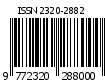
ISSN: 2320-2882 Impact Factor: 7.97 and ISSN APPROVED Journal Starting Year (ESTD) : 2013


ISSN and 7.97 Impact Factor Details
ISSN: 2320-2882 Impact Factor: 7.97 and ISSN APPROVED Journal Starting Year (ESTD) : 2013
DOI Details
CONFERENCE
CONFERENCE MANAGMENT & PUBLICATION CONFERENCE PROPOSAL
RECENT CONFERENCE

CONFERENCE PROPOSAL CONFERENCE PROCEEDINGS
CONFERENCE PROPOSAL CONFERENCE PROCEEDINGS
For Reviewer /Referral (RMS) Earn 500 per paper
Important Links
NEWS & Conference
Digital Library
IJCRT RMS | Earn 500 Per Paper.

Open Access


LICENSE
Indexing Partner
Scholarly open access journals, Peer-reviewed, and Refereed Journals, Impact factor 7.97 (Calculate by google scholar and Semantic Scholar | AI-Powered Research Tool) , Multidisciplinary, Monthly, Indexing in all major database & Metadata, Citation Generator, Digital Object Identifier(DOI)