Important Details
IJCRT - International Peer Reviewed, Open Access Journal, Multidisciplinary, Monthly, Nominal(Low) Fees for Professional Research Services International Journal of Creative Research Thoughts - IJCRT Peer Review Journal, Refereed Journal, Peer Reviewed Journal , Referred Journal and Indexed Journal, Open access, Online and Print Journal,international Journal Open Access, Accepted by Indian and foreign university ,IJCRT Followed Norms, guidelines, requirement, listing criteria and methodology of score/point also applied from: Scopus , Web of Science , UGC Approved , UGC CARE, UGC-CARE .
UGC Approved Journal No: 49023 (18)
UGC approval Link
https://ijcrt.org/ugc%20approval.jpg
All Policy and Approval
Please Like Our Facebook Page | CrossRef DOI and Hard copy of Certificate Provide if required. | www.IJCRT.org | editor@IJCRT.org | IJCRT WhatsApp +91 94294 58311
Publication Details:
- Paper Submission : 31-Aug-2026. Call For Paper (Volume 14 | Issue 8 | Month- August 2026)
- Acceptance/Rejection Notification: Within 02-04 Days.
- Paper Publish: Within 02-04 Days after submitting all documents.
-
Submit Your Paper Any time There No deadline.
-
Publication fees : 1570 INR for Indian author & 59$ for foreign International author.
Please Like Our Facebook Page | CrossRef DOI and Hard copy of Certificate Provide if required.
Licence and Indexing
Indexing In Google Scholar, SSRN, ResearcherID-Publons, Semantic Scholar | AI-Powered Research Tool, Microsoft Academic, Academia.edu, arXiv.org, Research Gate, CiteSeerX, ResearcherID Thomson Reuters, Mendeley : reference manager, DocStoc, ISSUU, Scribd, and many more | High Impact Factor: 7.97 | Digital object identifier (DOI) and Hard Copy of certificate Provided.




























Licence
DOI
ISSN Approved impact factor: 7.97 
Creative Common 
Valid as per new UGC Gazette regulations 

INTERNATIONAL JOURNAL OF CREATIVE RESEARCH THOUGHTS - IJCRT (IJCRT.ORG)
International Peer Reviewed & Refereed Journals, Open Access Journal
IJCRT Peer-Reviewed (Refereed) Journal as Per New UGC Rules.
ISSN Approved Journal No: 2320-2882 | Impact factor: 7.97 | ESTD Year: 2013
Call For Paper - Volume 14 | Issue 8 | Month- August 2026
Scholarly open access journals, Peer-reviewed, and Refereed Journals, Impact factor 7.97 (Calculate by google scholar and Semantic Scholar | AI-Powered Research Tool) , Multidisciplinary, Monthly, Indexing in all major database & Metadata, Citation Generator, Digital Object Identifier(CrossRef DOI)
IJCRT WhatsApp Contact
IJCRT Search Xplore - Search all paper by Paper Name , Author Name, and Title
Volume 14 | Issue 5 |
Volume 14 | Issue 5 | Month
Downlaod After Publication 1) Table of content index in PDF
2) Table of content index in HTML 2)Table of content index in HTML
3) Front Page 3) Front Page
4) Back Page 4) Back Page
5) Editor Board Member 5)Editor Board Member
6) OLD Style Issue 6)OLD Style Issue
 |
 |
|---|---|
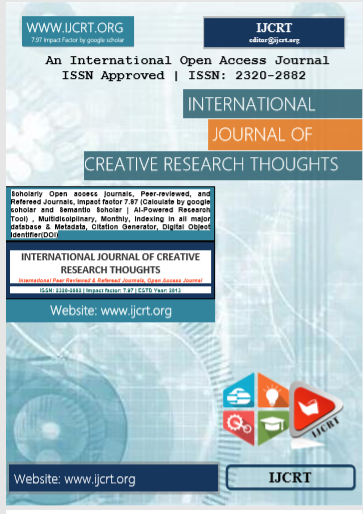
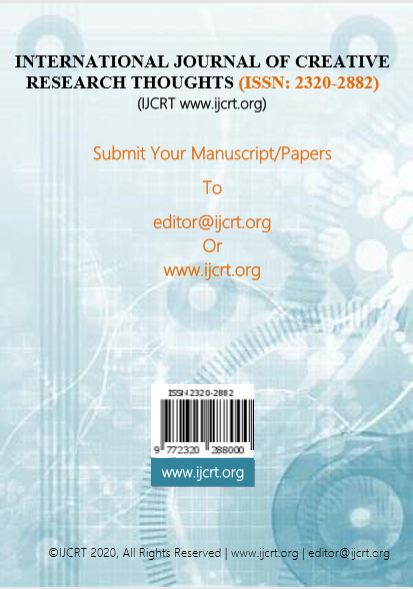
| IJCRT Journal front page | IJCRT Journal Back Page |
Paper Title: FORMULATION AND EVALUATION OF HERBAL CREAM OF ACACIA NILOTICA
Author Name(s): Gaikwad Shubham Arjun, Munde Anil Dattatray, Kute Vaishnavi Ram, Devkate Shubhangi Laxman, Mule M M
Published Paper ID: - IJCRT21X0407
Register Paper ID - 308987
Publisher Journal Name: IJPUBLICATION, IJCRT
DOI Member ID: 10.6084/m9.doi.one.IJCRT21X0407 and DOI :
Author Country : Indian Author, India, 431122 , Beed, 431122 , | Research Area: Pharmacy All Published Paper URL: http://ijcrt.org/viewfull.php?&p_id=IJCRT21X0407 Published Paper PDF: download.php?file=IJCRT21X0407 Published Paper PDF: http://www.ijcrt.org/papers/IJCRT21X0407.pdf
Your Paper Publication Details:
Title: FORMULATION AND EVALUATION OF HERBAL CREAM OF ACACIA NILOTICA
DOI (Digital Object Identifier) :
Pubished in Volume: 14 | Issue: 5 | Year: May 2026
Publisher Name : IJCRT | www.ijcrt.org | ISSN : 2320-2882
Subject Area: Pharmacy All
Author type: Indian Author
Pubished in Volume: 14
Issue: 5
Pages: w494-w532
Year: May 2026
Downloads: 104
E-ISSN Number: 2320-2882
Abstract
Herbal formulations have gained considerable importance in recent years due to their improved safety profile, patient compliance, and therapeutic effectiveness. Acacia nilotica, commonly known as Babul, is a medicinal plant widely used in traditional medicine systems because of its antimicrobial, anti-inflammatory, antioxidant, wound healing, and skin protective activities. The present study was aimed at the formulation and evaluation of herbal cream containing extract of Acacia nilotica. The herbal cream was prepared using suitable excipients such as stearic acid, cetyl alcohol, glycerin, triethanolamine, liquid paraffin, methyl paraben, propyl paraben, and purified water. Different formulations were developed by varying concentrations of Acacia nilotica extract and evaluated for various physicochemical parameters including appearance, pH, viscosity, spreadability, washability, homogeneity, irritancy, stability, and antimicrobial activity. The prepared formulations showed acceptable organoleptic properties, good consistency, suitable pH compatible with skin, satisfactory spreadability, and stability during storage conditions. The herbal cream demonstrated promising antimicrobial and skin protective properties due to the presence of bioactive phytoconstituents such as tannins, flavonoids, phenolic compounds, and alkaloids present in Acacia nilotica. The study concluded that Acacia nilotica can be effectively incorporated into topical cream formulations and may serve as a safe and effective herbal preparation for skin care and management of minor skin infections.
Licence: creative commons attribution 4.0
License
Creative Commons Attribution 4.0 and The Open Definition

Keywords
Acacia nilotica, Herbal cream, Antimicrobial activity, Skin care, Topical formulations evaluation study
License
Creative Commons Attribution 4.0 and The Open Definition
Paper Title: The Present Study Socuses On Designing A Novel Oral Jelly Formulation Containing Paracetamol To Overcome Limitations Associated With Conventional Dosage Forms Such As Syrups And Tablets.
Author Name(s): Munjal Aditya Ashokrao, Maske Pallavi Shrimant, Tambare Rutuja Tukaram, Kale Dhanshri Vilas, Miss. Jadhav R.V
Published Paper ID: - IJCRT21X0406
Register Paper ID - 308960
Publisher Journal Name: IJPUBLICATION, IJCRT
DOI Member ID: 10.6084/m9.doi.one.IJCRT21X0406 and DOI :
Author Country : Indian Author, India, 431122 , Beed, 431122 , | Research Area: Pharmacy All Published Paper URL: http://ijcrt.org/viewfull.php?&p_id=IJCRT21X0406 Published Paper PDF: download.php?file=IJCRT21X0406 Published Paper PDF: http://www.ijcrt.org/papers/IJCRT21X0406.pdf
Your Paper Publication Details:
Title: THE PRESENT STUDY SOCUSES ON DESIGNING A NOVEL ORAL JELLY FORMULATION CONTAINING PARACETAMOL TO OVERCOME LIMITATIONS ASSOCIATED WITH CONVENTIONAL DOSAGE FORMS SUCH AS SYRUPS AND TABLETS.
DOI (Digital Object Identifier) :
Pubished in Volume: 14 | Issue: 5 | Year: May 2026
Publisher Name : IJCRT | www.ijcrt.org | ISSN : 2320-2882
Subject Area: Pharmacy All
Author type: Indian Author
Pubished in Volume: 14
Issue: 5
Pages: w455-w493
Year: May 2026
Downloads: 112
E-ISSN Number: 2320-2882
Abstract
Pediatric drug delivery systems require special consideration due to physiological, psychological, and developmental differences compared to adults. Conventional dosage forms such as tablets and capsules are often unsuitable for children due to swallowing difficulties, risk of choking, and poor acceptability. Liquid formulations, although commonly used, suffer from issues such as dosing inaccuracies, stability concerns, and unpleasant taste. The present research work focuses on the design and evaluation of a chewable oral jelly formulation containing Paracetamol, a widely used analgesic and antipyretic agent in pediatric therapy. The objective was to develop a palatable, stable, and effective dosage form that enhances patient compliance and ensures accurate dosing. The formulation was developed using hydrophilic polymers such as pectin, gelatin, and sodium alginate, along with sweeteners, flavoring agents, and preservatives. Various formulations were prepared by altering polymer concentrations and evaluated for physicochemical parameters including pH, viscosity, drug content uniformity, syneresis, texture, and in vitro drug release profile. The optimized formulation demonstrated desirable characteristics such as acceptable taste, uniform drug distribution, minimal syneresis, and rapid drug release. Stability studies conducted as per ICH guidelines confirmed the formulation's stability. The study concludes that chewable oral jelly is a promising and patient-friendly alternative to conventional pediatric dosage forms.
Licence: creative commons attribution 4.0
License
Creative Commons Attribution 4.0 and The Open Definition
Keywords
Pediatric dosage form, Oral jelly, Paracetamol, Taste masking, Drug delivery system
License
Creative Commons Attribution 4.0 and The Open Definition
Paper Title: Evaluation Of The Financial Performance Of Cognizant Technology Solutions (CTS) And Tata Consultancy Services (TCS) - A Comparative Analysis
Author Name(s): Navomita Ghoshal
Published Paper ID: - IJCRT21X0405
Register Paper ID - 308524
Publisher Journal Name: IJPUBLICATION, IJCRT
DOI Member ID: 10.6084/m9.doi.one.IJCRT21X0405 and DOI : https://doi.org/10.56975/ijcrt.v14i5.308524
Author Country : Indian Author, India, 781029 , Guwahati, 781029 , | Research Area: Management All Published Paper URL: http://ijcrt.org/viewfull.php?&p_id=IJCRT21X0405 Published Paper PDF: download.php?file=IJCRT21X0405 Published Paper PDF: http://www.ijcrt.org/papers/IJCRT21X0405.pdf
Your Paper Publication Details:
Title: EVALUATION OF THE FINANCIAL PERFORMANCE OF COGNIZANT TECHNOLOGY SOLUTIONS (CTS) AND TATA CONSULTANCY SERVICES (TCS) - A COMPARATIVE ANALYSIS
DOI (Digital Object Identifier) : https://doi.org/10.56975/ijcrt.v14i5.308524
Pubished in Volume: 14 | Issue: 5 | Year: May 2026
Publisher Name : IJCRT | www.ijcrt.org | ISSN : 2320-2882
Subject Area: Management All
Author type: Indian Author
Pubished in Volume: 14
Issue: 5
Pages: w396-w454
Year: May 2026
Downloads: 143
E-ISSN Number: 2320-2882
Abstract
The information technology sector has become a cornerstone of global development, driving transformative changes across industries, economies, and daily life. Its evolution has paved the way for innovations that have reshaped the way we communicate, work, and access information. As the sector continues to evolve, its impact is likely to grow, making it essential for stakeholders, governments, businesses, and individuals to address its challenges while harnessing its potential for positive change. The present study is conducted on Cognizant Technology Solutions (CTS) and Tata Consultancy Services (TCS). CTS and TCS are very popular among the youngsters of India. TCS was established before CTS. Both CTS and TCS are Information Technology (IT) companies. According to some people, CTS has higher rates for culture than TCS. Nowadays, there is a frequent loss of jobs among the people working in Multinational Companies (MNCs). So, people working in MNCs are in constant search of good job security and high-paying jobs. TCS provides higher job security and advancement than CTS. The salary earned by a fresher in TCS is comparatively less than those working in CTS. TCS encourages and empowers its employees to make positive contributions to the world whereas CTS enables its employees to learn and grow. Both companies are successful in the world of business. Both companies are operational around the world. The study will analyze the profitability and growth of these two companies. Hence, CTS and TCS have been chosen for study to evaluate their financial performances.
Licence: creative commons attribution 4.0
License
Creative Commons Attribution 4.0 and The Open Definition
Keywords
Financial performance, Financial ratios, SWOT Analysis
License
Creative Commons Attribution 4.0 and The Open Definition
Paper Title: Evaluating the Effectiveness Of Workplace Sexual Harassment Protections For Women In India: A Critical Study
Author Name(s): Varshita Yadav
Published Paper ID: - IJCRT21X0404
Register Paper ID - 308082
Publisher Journal Name: IJPUBLICATION, IJCRT
DOI Member ID: 10.6084/m9.doi.one.IJCRT21X0404 and DOI :
Author Country : Indian Author, India, 201017 , Ghaziabad, 201017 , | Research Area: Medical Science All Published Paper URL: http://ijcrt.org/viewfull.php?&p_id=IJCRT21X0404 Published Paper PDF: download.php?file=IJCRT21X0404 Published Paper PDF: http://www.ijcrt.org/papers/IJCRT21X0404.pdf
Your Paper Publication Details:
Title: EVALUATING THE EFFECTIVENESS OF WORKPLACE SEXUAL HARASSMENT PROTECTIONS FOR WOMEN IN INDIA: A CRITICAL STUDY
DOI (Digital Object Identifier) :
Pubished in Volume: 14 | Issue: 5 | Year: May 2026
Publisher Name : IJCRT | www.ijcrt.org | ISSN : 2320-2882
Subject Area: Medical Science All
Author type: Indian Author
Pubished in Volume: 14
Issue: 5
Pages: w319-w395
Year: May 2026
Downloads: 171
E-ISSN Number: 2320-2882
Abstract
Workplace sexual harassment remains a significant barrier to achieving gender equality and ensuring safe working environments for women in India, despite the existence of a comprehensive legal framework. The enactment of the Sexual Harassment of Women at Workplace (Prevention, Prohibition and Redressal) Act, 2013, inspired by the landmark Vishaka v. State of Rajasthan judgment, marked a crucial step toward recognizing and addressing such violations. However, the effectiveness of these legal protections in practice continues to raise important concerns. This study critically examines the extent to which existing legal mechanisms safeguard women against workplace sexual harassment. It adopts a doctrinal and analytical approach, drawing upon statutory provisions, judicial decisions, and secondary literature to evaluate both the theoretical strength and practical implementation of the law. The research also incorporates a socio-legal perspective to understand how workplace culture, power dynamics, and societal attitudes influence the reporting and redressal of such incidents. The findings reveal a persistent gap between law and practice. While the legal framework appears robust on paper, its effectiveness is undermined by widespread underreporting, lack of awareness among employees, and inefficiencies in institutional mechanisms such as Internal Complaints Committees. Additionally, socio-cultural barriers, including fear of retaliation, stigma, and patriarchal norms, continue to discourage victims from seeking justice. Challenges are further compounded in the unorganized sector, where enforcement remains particularly weak. The study concludes that addressing workplace sexual harassment requires more than legal provisions alone. Strengthening implementation, ensuring accountability, promoting awareness, and fostering a culture of zero tolerance are essential for translating legal intent into meaningful protection. The research highlights the need for systemic reforms and sustained efforts to create safer, more inclusive workplaces for women in India.
Licence: creative commons attribution 4.0
License
Creative Commons Attribution 4.0 and The Open Definition
Keywords
Workplace Sexual Harassment; POSH Act, 2013; Gender Equality; Women's Rights; Legal Framework in India; Internal Complaints Committee (ICC); Underreporting; Socio-legal Challenges
License
Creative Commons Attribution 4.0 and The Open Definition
Call For Paper August 2026
Call For Papers
August 2026
Volume 14 | Issue 8
Last Date :
31-Aug-2026
Submit Manuscript Online Impact Factor: 7.97 Review Results : Within 02-03 Days Paper Publication : Within 02-03 Days
August 2026
Volume 14 | Issue 8
Last Date :
31-Aug-2026
Submit Manuscript Online Impact Factor: 7.97 Review Results : Within 02-03 Days Paper Publication : Within 02-03 Days
Published Issue Details
For Authors
Forms / Downloads
Other IMP Links
Indexing Partner
Research Area
LICENSE





ISSN and 7.97 Impact Factor Details

ISSN: 2320-2882 Impact Factor: 7.97 and ISSN APPROVED Journal Starting Year (ESTD) : 2013


ISSN and 7.97 Impact Factor Details
ISSN: 2320-2882 Impact Factor: 7.97 and ISSN APPROVED Journal Starting Year (ESTD) : 2013
DOI Details
CONFERENCE
CONFERENCE MANAGMENT & PUBLICATION CONFERENCE PROPOSAL
RECENT CONFERENCE

CONFERENCE PROPOSAL CONFERENCE PROCEEDINGS
CONFERENCE PROPOSAL CONFERENCE PROCEEDINGS
For Reviewer /Referral (RMS) Earn 500 per paper
Important Links
NEWS & Conference
Digital Library
IJCRT RMS | Earn 500 Per Paper.

Open Access


LICENSE
Indexing Partner
Scholarly open access journals, Peer-reviewed, and Refereed Journals, Impact factor 7.97 (Calculate by google scholar and Semantic Scholar | AI-Powered Research Tool) , Multidisciplinary, Monthly, Indexing in all major database & Metadata, Citation Generator, Digital Object Identifier(DOI)